

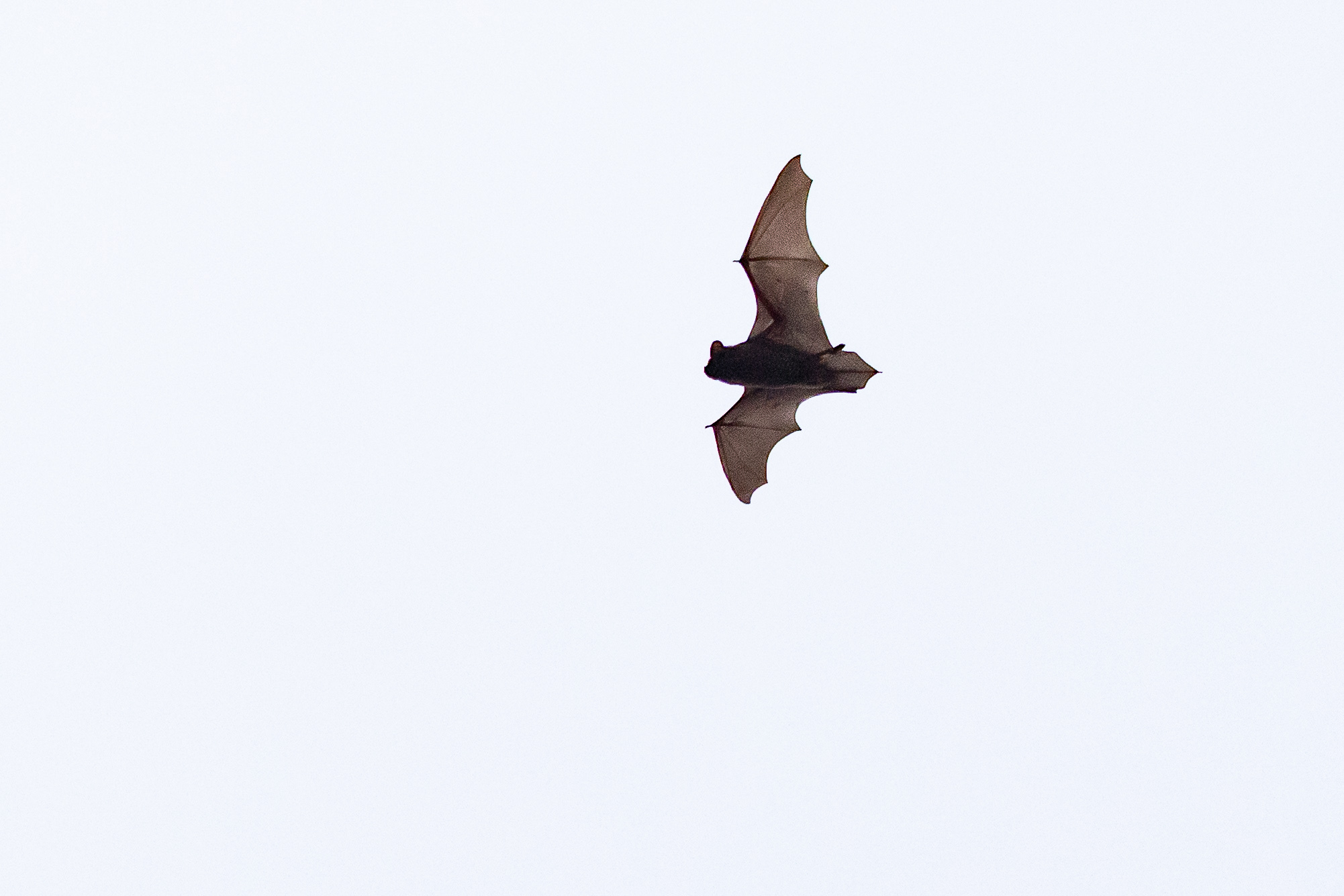
Every evening, about half an hour after sunset, something happens above the canals of Leiden, a city in the Netherlands, that most people miss completely. A tiny shadow darts over the water. Then another. Fast, erratic, impossibly precise. You might mistake them for large insects or small birds. They are neither. Welcome to bat o’clock.
Why do bats seem to love cities in Netherlands?
Bats choosing urban life over forests sounds counterintuitive — but from a bat’s perspective, the city is basically a luxury resort. Old Dutch buildings are full of gaps, beams, and roof spaces that make perfect roosts: warm, dark, and wind-protected. The streets are lit all night, which attracts insects in huge numbers — a permanent, concentrated buffet. And urban heat islands keep temperatures a few degrees higher than the surrounding countryside, which is a big deal when you’re burning energy flying at high speed in the dark. In short: great food, great housing, great climate. Bats figured out urban living long before humans started calling it a lifestyle.
Who’s flying above you
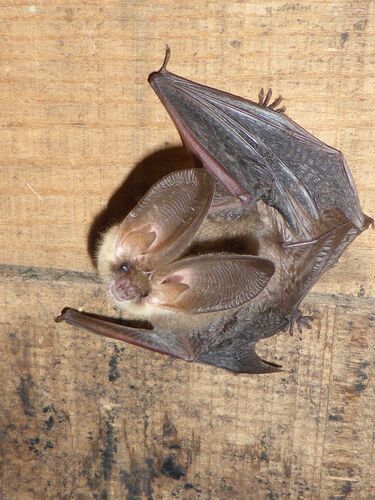
Three species dominate Leiden’s skies. The common pipistrelle (Pipistrellus pipistrellus) is the one you’re most likely to see — weighing less than 8 grams, about the same as a 2-euro coin, yet capable of eating up to 3,000 mosquitoes in a single night. You’re welcome. The Nathusius’ pipistrelle (Pipistrellus nathusii) prefers hunting low over water, making Leiden’s canal network an ideal hunting ground. And the brown long-eared bat (Plecotus auritus), with ears nearly as long as its body, can actually hear a moth walking on a leaf in complete darkness. Remarkable animal. Slightly terrifying, if you’re a moth.
Echolocation: a sense you don’t have
Bats navigate and hunt using ultrasound — frequencies between 20 and 120 kHz, well above human hearing range. They emit pulses and read the returning echoes with extraordinary precision, distinguishing an edible insect from a pebble of the same size, at speed, in total darkness. City life complicates this superpower. Traffic noise, glass facades, and electrical interference all disrupt the signal. Some urban bat populations are already adjusting their call frequencies to cut through the urban noise — a small but real example of evolution happening right now, above a Dutch canal.
Where can you spot them?
No special equipment needed! Go to the Rapenburg or Galgewater canals on a warm evening in summer, about 30–40 minutes after sunset. Watch the air above the water. The erratic zigzag flight is unmistakable once you know what you’re looking for. For extra credit, bring a bat detector — a small device that shifts ultrasound into audible range. The common pipistrelle sounds like a rapid dry click, almost like a tiny geiger counter. It’s oddly addictive.
They’re protected — and they need it
Bat populations across Europe collapsed during the 20th century due to pesticide use, habitat loss, and building renovations that destroyed roosts. In the Netherlands they’ve been legally protected for decades, and the situation is slowly improving. Several colonies have been documented in Leiden’s historic churches, including near the Pieterskerk and the Burcht. Disturbing a roost — even during a renovation — requires a special permit. The bats, for once, have the law on their side.
Look up tonight
Bats are Leiden’s most overlooked residents. They’ve been here longer than most buildings, they keep the mosquito population in check every single night, and they ask for absolutely nothing in return. Next time you’re out after dark, take thirty seconds to watch the sky above the canals. The night shift is already on.
References
Lewanzik, D. et al. (2022). “Bats adjust echolocation and social call design as a response to urban environments.” Frontiers in Ecology and Evolution, 10. https://doi.org/10.3389/fevo.2022.939408
Kuipers, H. et al. (2014). “Return of the bats? A prototype indicator of trends in European bat populations in underground hibernacula.” Mammalian Biology / Biological Conservation. https://doi.org/10.1016/j.mambio.2014.09.004
Browning, E. et al. (2021). “Drivers of European bat population change: a review reveals evidence gaps.” Mammal Review, 51(2). https://doi.org/10.1111/mam.12239
Featured Image:
