

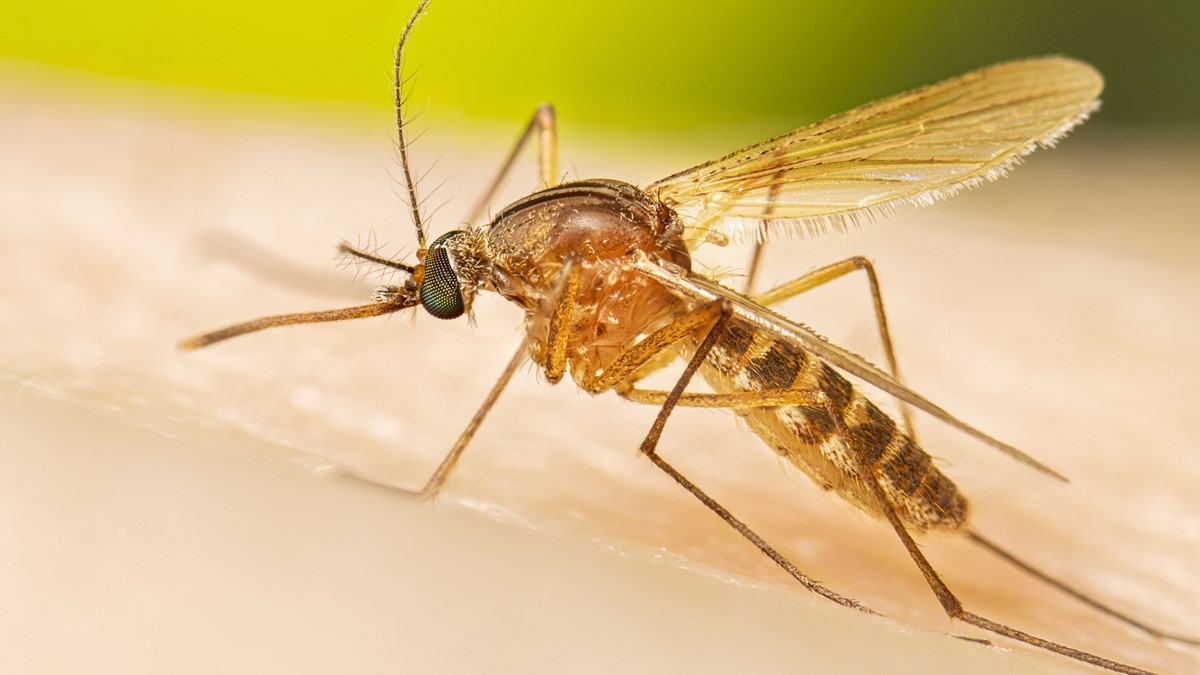
The Earth is surely heating up, and so are our cities. The concrete structures that surround us in our daily lives quickly raise temperatures in the cities up until 15 degrees Celsius higher than surrounding rural areas (Mentaschi, 2022). One of the key strategies of governments to make cities more resilient to climate change is to increase the urban green space by creating more parks and planting trees. By increasing the number of parks and trees in urban areas, cities can mitigate temperature changes, improve air quality and improve biodiversity in the city. Worry has been expressed that some of these climate adaptation strategies could affect mosquito-borne disease risk as it could create more mosquito habitats in the city. It is not clear, however, to what extent these strategies could be beneficial or detrimental to the mosquito.

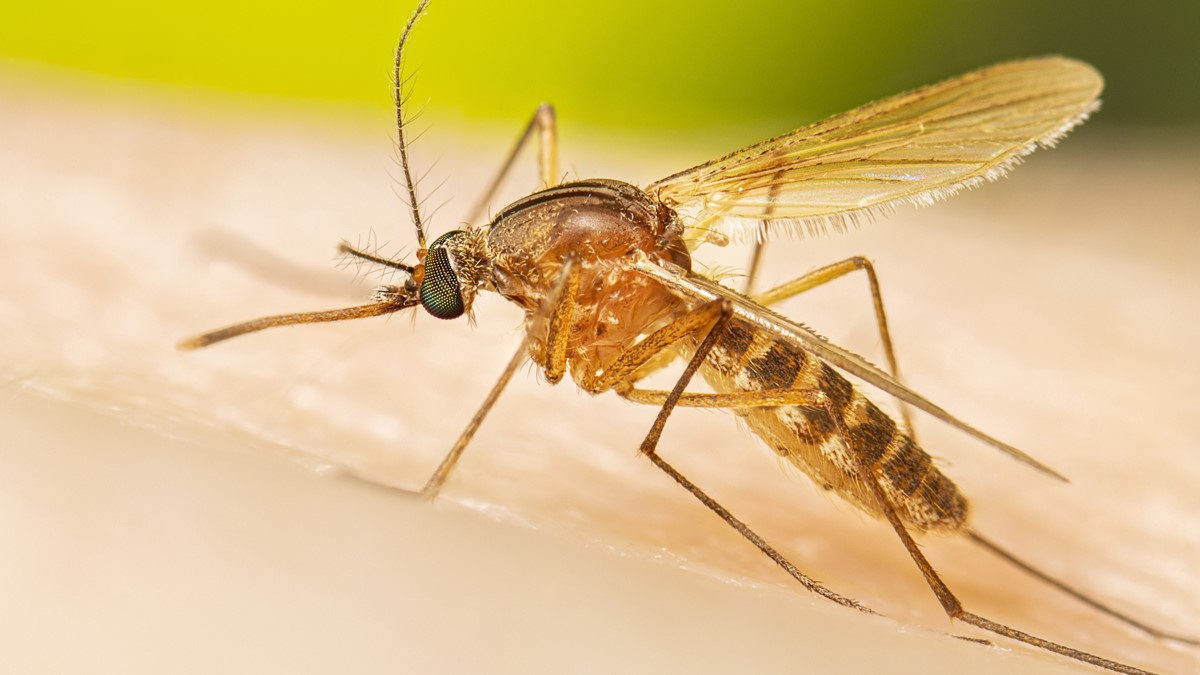
The common house mosquito, Culex pipiens, is highly abundant throughout Europe. The insect is known to bite humans and other vertebrates, leaving an itchy bump. These mosquitoes need a bloodmeal in order to be able to produce eggs, which is also why only female mosquitoes bite for blood. Normally, this is just annoying for the bitten person or animal, but not dangerous. However, some mosquitoes are vectors for disease —if they bite a carrier of a disease (often an animal) and then bite a human, this human could be infected with the disease. Culex pipiens is a vector for viruses like the West-Nile virus and the Usutu virus, both of which are carried by birds.

When we know how and where mosquitoes breed and live, we can predict and protect areas with a high mosquito-borne disease risk. A recent study identified the distribution of Culex pipiens in different life stages across the urban city of Leiden in the Netherlands. For this, they paired 3 schoolyards and 3 parks. Schoolyards in residential areas were used as a proxy for urban grey space, as they are relatively uniform in terms of vegetation and size and are more accessible than privately owned spaces. Parks were used as the urban green space.
Interestingly, adult mosquitoes were more abundant in parks (urban green), while egg rafts and larvae were more abundant in residential areas (urban grey). The fact that mosquitoes prefer the parks could be due to the microclimatic conditions (temperature, wind speed, humidity) that act as a buffer and help adult survival (Carrieri, 2014; Ciota, 2014). Structures in cities like roads and buildings heat up the city and the microclimates, causing the urban heat island effect (Yang, 2023). Low humidity and high temperatures may not be ideal for adult Culex pipiens as they are quick to dehydrate (Wilkerson, 2021), which may be why the cooler, humid parks were more populated by adults. In fact, Krol et al. (2024) showed a difference in humidity and temperature between parks and residential areas, but the authors refrained from making any claims regarding the effect of microclimates due to restraints in their experimental design.
Mosquitoes lay their eggs in an aquatic environment. Permanent water bodies such as ditches, ponds and lakes are often home to many predators such as fish, amphibians and dragonfly larvae. These predators hunt and eat the mosquito larvae, lowering their abundances in such waters. In residential areas, something peculiar occurs. Because residential areas are so rich in artificial substrates (containers, floodwaters drains, pots, buckets, bird baths, etc.), temporal water bodies can occur after rain. The water stays in these artificial substrates, creating new potential breeding places for mosquitoes without any predators. Larvae and eggs were much more abundant in residential areas, which is not surprising with this great number of predator-free habitats to live in.
The fact that mosquitoes seemingly prefer parks in their adult stage but are more abundant in residential areas as eggs or during their larval stage raises the question of how mosquitoes migrate between the two types of areas. Mosquitoes may seek shelter and more abundant food sources in the parks and then when looking for a breeding habitat (incidentally) move towards the residential areas as there are just more suitable breeding habitats to be found. This within city migration between breeding grounds and feeding grounds may offer insights into the adaptive potential of mosquitoes in urban environments. While Culex pipiens can fly up to a few miles, if the urban green and grey spaces are further apart than their maximum flight distance, these mosquitoes may have found new strategies to fly further for food. Further research could identify how these mosquitoes adapt to further breeding and feeding ground.
Houses neighbouring local parks or green spaces could be at a higher risk of mosquito nuisance and diseases. While we certainly don’t want city planners to decrease green spaces to reduce mosquito risks, perhaps the best strategies moving forward will be to increase public awareness to remove standing water and to use guided evolution of mosquitoes to reduce their populations.
References:
| La Habra, CA – Official Website. (z.d.). https://www.lhcm.org/
Carrieri, M., Fariselli, P., Maccagnani, B., Angelini, P., Calzolari, M., & Bellini, R. (2014). Weather Factors Influencing the Population Dynamics ofCulex pipiens(Diptera: Culicidae) in the Po Plain Valley, Italy (1997-2011). Environmental Entomology, 43(2), 482–490. https://doi.org/10.1603/en13173
Ciota, A. T., Matacchiero, A. C., Kilpatrick, A. M., & Kramer, L. D. (2014). The Effect of Temperature on Life History Traits ofCulexMosquitoes. Journal Of Medical Entomology, 51(1), 55–62. https://doi.org/10.1603/me13003
Krol, L., Langezaal, M., Budidarma, L., Wassenaar, D., Didaskalou, E. A., Trimbos, K., Dellar, M., Van Bodegom, P. M., Geerling, G. W., & Schrama, M. (2024). Distribution of Culex pipiens life stages across urban green and grey spaces in Leiden, The Netherlands. Parasites & Vectors, 17(1). https://doi.org/10.1186/s13071-024-06120-z
Life Cycle of Culex Mosquitoes. (2024, 16 april). Mosquitoes. https://www.cdc.gov/mosquitoes/about/life-cycle-of-culex-mosquitoes.html
Mentaschi, L., Duveiller, G., Zulian, G., Corbane, C., Pesaresi, M., Maes, J., Stocchino, A., & Feyen, L. (2022). Global long-term mapping of surface temperature shows intensified intra-city urban heat island extremes. Global Environmental Change, 72, 102441. https://doi.org/10.1016/j.gloenvcha.2021.102441
Snep, R. (2021, 19 februari). The green city of the future. Spotlight. https://weblog.wur.eu/spotlight/the-green-city-of-the-future/
Wilkerson, R. (2021). Mosquitoes of the World. In Johns Hopkins University Press eBooks. https://doi.org/10.1353/book.79680
Yang, S., Wang, L., Stathopoulos, T., & Marey, A. M. (2023). Urban microclimate and its impact on built environment – A review. Building And Environment, 238, 110334. https://doi.org/10.1016/j.buildenv.2023.110334
Cover photo: CDC

Leave a Reply