

When people think about urban evolution, their first thought tends to be how animals adapt to urban environments by dealing with pollution, traffic, noise, or artificial light. Urban evolution is generally considered to be biological evolution in response to changing physical environments in our cities, such as the various ways birds change their vocalisation to compete with traffic noise or how insects evolve adaptations to survive in urban heat islands.
However, cities are not shaped only by architecture and climate. They are also shaped by human emotion. As you walk through an urban area, you will begin to see very quickly that we don’t treat all animals the same way.
Some species are welcomed into the urban environment. For example, songbirds are fed in backyards, bees are supported by flower gardens, and squirrels are welcomed in parks. In contrast, other species experience immediate repulsion. Rats are poisoned, pigeons are chased away, and cockroaches are killed the moment we see them.
The responses to these animals may not always have logical reasoning. A pigeon eating bread crumbs from the sidewalk may not pose a safety risk; however, many people refer to them as “rats with wings”. Yet many animals that have the ability to transmit diseases and/ or negatively affect the ecosystem may be tolerated simply due to their attractiveness or familiarity [1].
The ecology of human emotion
Cities are usually viewed as environments dominated by human activity. However, there is also an emotional aspect that determines how humans interact with urban animals. Emotional responses are influenced by fear, attraction, empathy, and, in particular, disgust when we encounter wild animals in the city.
Disgust may have evolved as a means to avoid transmitting diseases. The reaction people have to seeing rotting food, parasites, and any other signs of contamination triggered an avoidance reaction and, therefore, historically an increased survival [2]. Unfortunately, these same feelings also happen over animals that are associated with something dirty, disorganised, or uncontrolled in an urban environment.
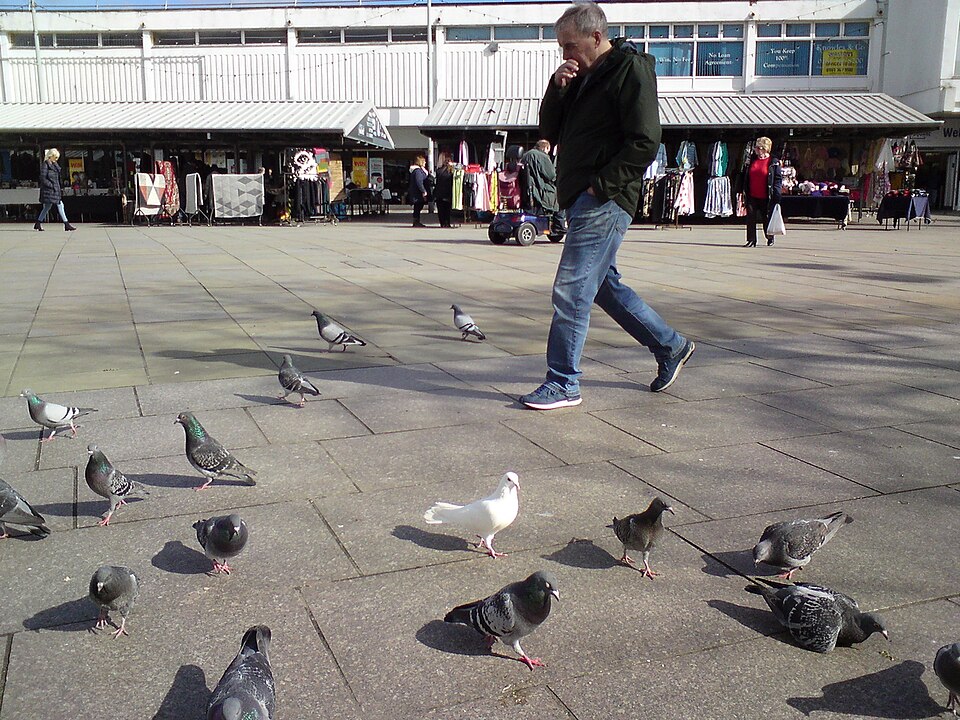
This creates what sociologists and urban ecologists call a “moral ecology” of the city in which some animals are viewed as symbols of cleanliness or nature and others are viewed as symbols of invasion. Urban sociologist Colin Jerolmack examined this issue in his article “How pigeons became Rats”, where he discusses that animals become “problems” not simply because of biology, but also how society views them because of cultural ideas surrounding cleanliness, order, and public space [3].
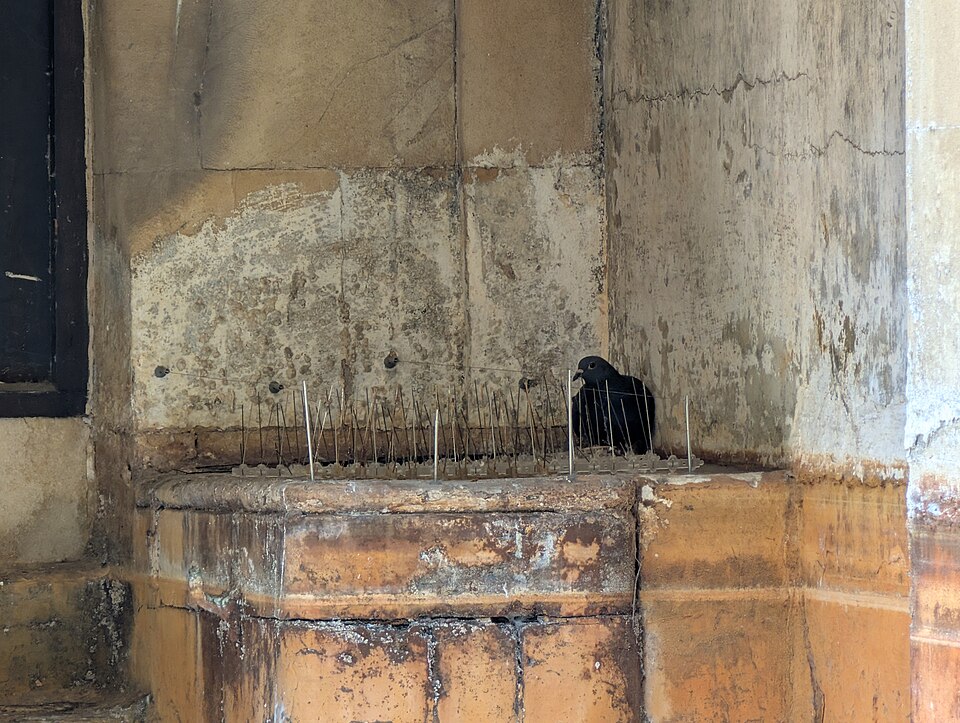
These perceptions can have ecological consequences. Once an animal is labeled a pest, cities will structure themselves to keep those species out. Anti-roosting spikes will be installed on buildings, garbage systems will be sealed, and extermination programmes will be developed.
For urban animals, surviving the city not only means navigating the roads and buildings, but also human emotional boundaries.
Cities as filters for behaviour
Some animals are not suited to the urban environment for various reasons. Animals in urban settings benefit from taking advantage of humans, while at the same time avoiding being around humans. Many ecologists refer to these animals as synanthropic species: animals that benefit from living with humans [4]. Examples of animals that do this are rats, pigeons, gulls, raccoons, and crows. They all use human food waste, shelter, or infrastructure created by urban life.
Coexisting with people also puts conflicting demands on the animals in urban areas. Animals need to become bold enough to approach human environments, yet also need to be cautious enough to avoid being exterminated. For example, pigeons that are comfortable being around people may have easier access to food, but if too many pigeons accumulate in an area, it will cause complaints and lead to efforts to get rid of them. Rats benefit from human waste; there is, however, a constant pressure from pest control programs in urban areas.
Different types of animal behaviour may be favoured over time. Research shows that successful urban animals exhibit more behavioural adaptability, creativity in solving problems, and tolerance of human disturbances compared to animals in rural areas and that cities act as evolutionary filters for cognition and personality [5, 6].
In other words, urban ecosystems are likely to choose animals that can “read” human behaviour.
The rat problem humans created
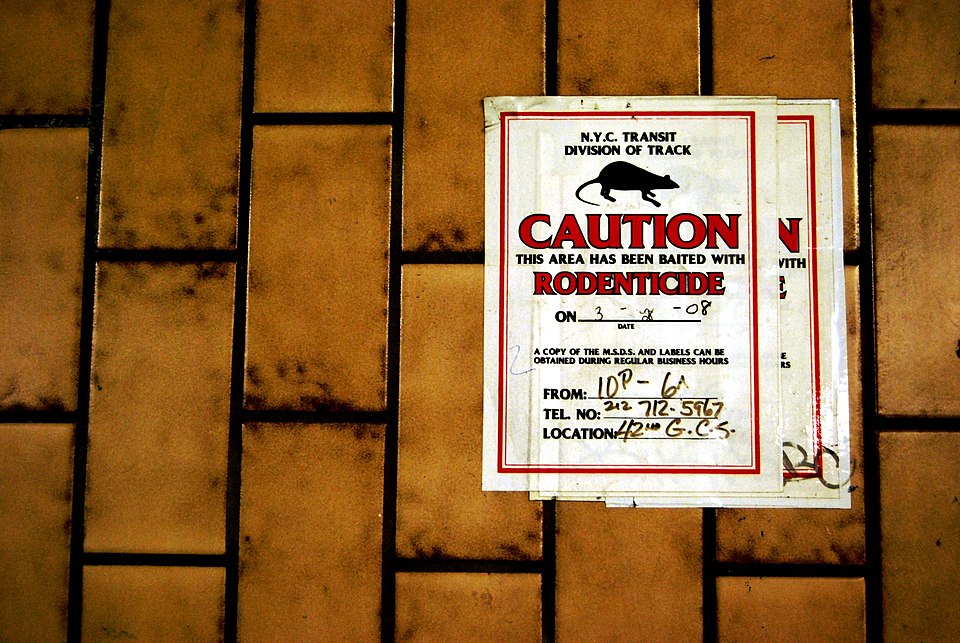
Rats are one of the least favoured urban animals. Humans have spent enormous amounts of energy trying to eliminate these animals through poison, traps, and infrastructure redesign. Despite all of these efforts, rats have consistently thrived in urban areas.
In fact, cities have unintentionally created a perfect environment for rats through dense infrastructure, underground tunnel systems, and food waste. While humans create a habitat for rats in their cities, they are also working against them to try to eliminate them from those same environments.
This conflict may be affecting the evolution of urban rats. Studies of rats in New York City suggest that urban rats can be divided into different genetic categories based on location. These differences may be caused by the selection pressure present in urban environments. [7]
A city built around human preference
This results in a unique kind of natural selection for animals living in cities. Animals that people find acceptable will have access to food, shelter, and safety, while animals we associate with disgust will continuously be pushed out of cities through extermination and infrastructures that are unsuitable. As cities continue to develop across the world, human emotions will likely become an even more important factor that will influence which animals are allowed to adapt to urban life.
In the future, surviving the city may not only depend on ecological fitness, but also on whether humans decide a species belongs there.
References
- Johnson, M. T. J., & Munshi-South, J. (2017). Evolution of life in urban environments.Science, 358(6363). https://doi.org/10.1126/science.aam8327
- Curtis, V., Aunger, R., & Rabie, T. (2004). Evidence that disgust evolved to protect from risk of disease.Proceedings of the Royal Society B Biological Sciences, 271(suppl_4), S131-3. https://doi.org/10.1098/rsbl.2003.0144
- Jerolmack, C. (2008). How Pigeons Became Rats: The Cultural-Spatial Logic of Problem Animals.Social Problems, 55(1), 72–94. https://doi.org/10.1525/sp.2008.55.1.72
- Francis, R. A., & Chadwick, M. A. (2013).Urban Ecosystems: Understanding the human environment. https://doi.org/10.4324/9780203133644
- Lowry, H., Lill, A., & Wong, B. B. M. (2012). Behavioural responses of wildlife to urban environments.Biological Reviews/Biological Reviews of the Cambridge Philosophical Society, 88(3), 537–549. https://doi.org/10.1111/brv.12012
- Sol, D., Lapiedra, O., & González-Lagos, C. (2013). Behavioural adjustments for a life in the city.Animal Behaviour, 85(5), 1101–1112. https://doi.org/10.1016/j.anbehav.2013.01.023
- Parsons, M. H., Sarno, R. J., & Deutsch, M. A. (2015). Jump-Starting Urban Rat Research: Conspecific Pheromones Recruit Wild Rats into a Behavioral and Pathogen-Monitoring Assay.Frontiers in Ecology and Evolution, 3. https://doi.org/10.3389/fevo.2015.00146
Featured Image: Wikimedia Commons

