

Hidden Tenants in Our Homes
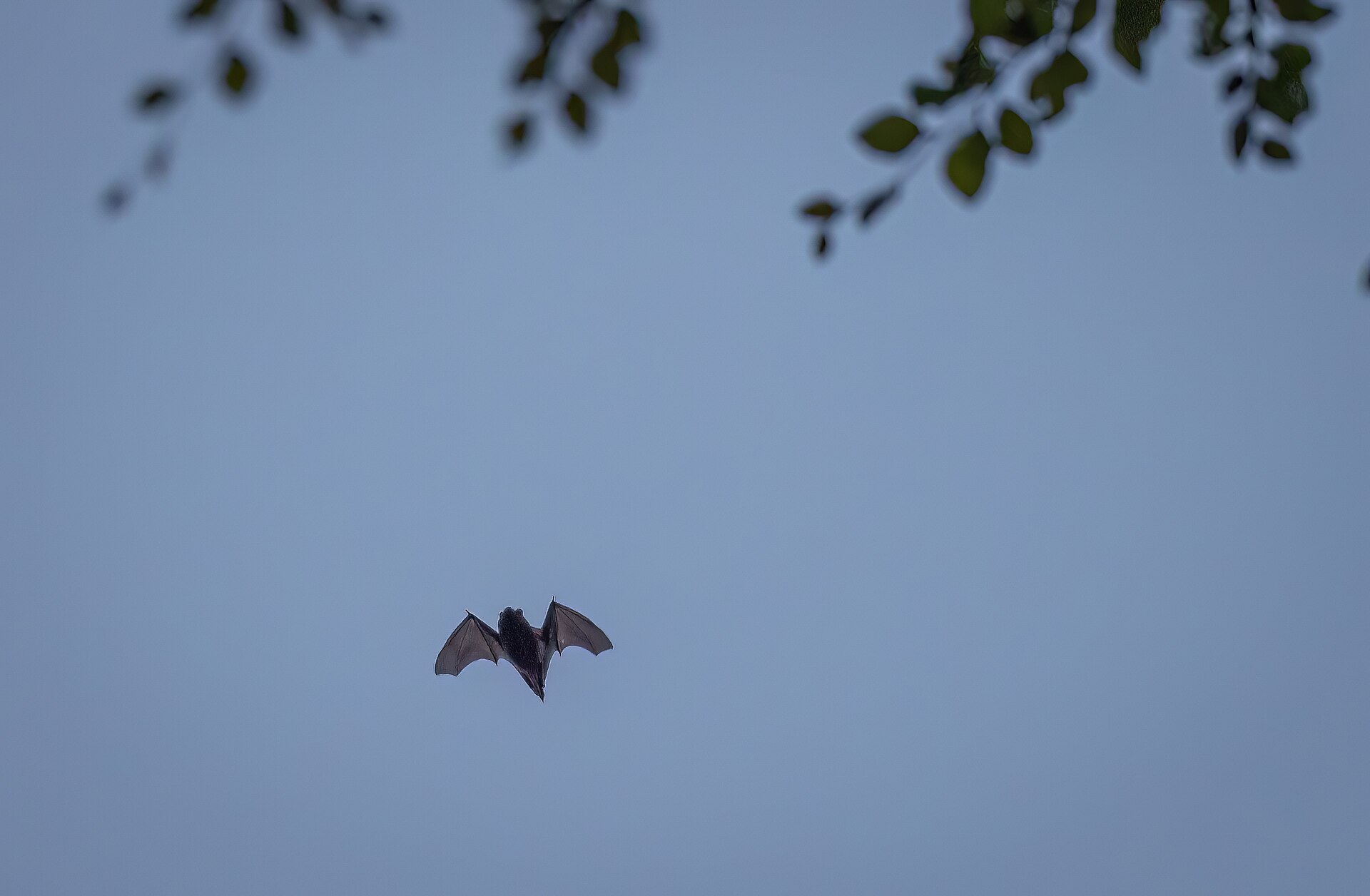
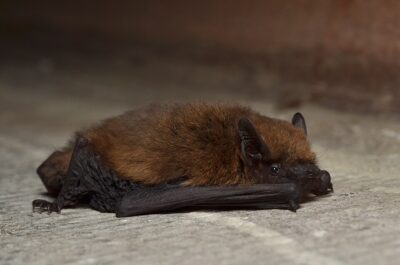
Hidden inside the walls of many Dutch homes lives one of the Netherlands’ most successful urban mammals: the ‘gewone dwergvleermuis’, or Common Pipistrelle (Pipistrellus pipistrellus). Dutch houses weren’t purposefully designed to become bat caves, yet the common pipistrelle has used practical architectural choices to its favour, allowing it to thrive in cities across the Netherlands.
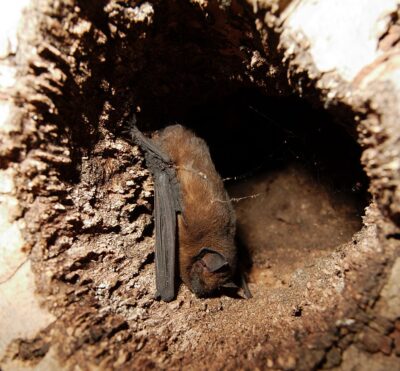
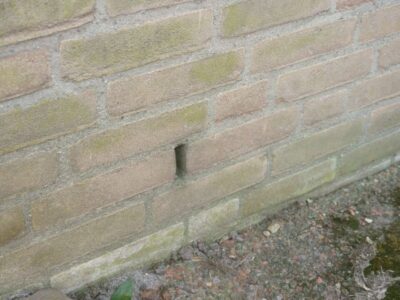
Many Dutch houses built during the twentieth century contain cavity walls: narrow spaces between inner and outer walls designed to improve insulation and ventilation. Moreover, small openings called ‘stootvoegen’ allow airflow and help prevent moisture buildup. For humans, these gaps are practical architectural details. For bats, however, they closely resemble the narrow, sheltered crevices they naturally seek out: spaces that are relatively warm, protected from rain and predators, and stable in temperature. Originally, the common pipistrelle evolved to roost in either natural crevices such as rock formations or tree hollows1. By chance, modern Dutch architecture recreated similar conditions, whereby humans unintentionally built an enormous artificial cave system stretching across the Netherlands!
Dutch Cities as Artificial Cave Systems
Species that adapt particularly well to urban environments in this way are sometimes described as synurbic: animals that achieve higher population densities in cities than in their original habitats. The common pipistrelle fits this description remarkably well. This is not about merely a tolerance of urban life, but a genuine ecological preference for it.2 The common pipistrelle is found across a vast geographic range extending from Britain to China, but Dutch cities may provide especially favourable conditions. The widespread prevalence of brick row housing, cavity walls, and the previously described ‘stootvoeg’ openings has created an extensive network of sheltered crevices. Combined with canals, gardens, and abundant insect populations drawn to artificial lighting, Dutch cities unintentionally provide many of the structural and ecological conditions pipistrelles naturally seek.
This is especially striking because, unlike regions with extensive limestone cave systems, the Netherlands historically offered relatively few natural cave-like roosting sites for bats. Before large-scale urbanisation, dutch bats depended mainly on tree hollows, loose bark, and scattered forest structures. The expansion of modern Dutch housing fundamentally transformed the availability of suitable roosting habitat, creating an unexpected ecological relationship between urbanisation and wildlife.
Why the Common Pipistrelle Thrives
The common pipistrelle as a bat species is especially well suited to this niche because of its tiny size. As one of the smallest bat species in Europe, weighing up to only seven grams with a wingspan of approximately twenty-four centimeters, it can access extremely narrow openings that larger bat species cannot use. It is also a dietary generalist, feeding opportunistically on whatever prey is most available, including mosquitoes, caddisflies, mayflies, lacewings, and moths. A single one of these bats can consume hundreds of insects in one night. Without urban bat populations, Dutch summer evenings would likely involve far more mosquitoes buzzing around our bedrooms and outdoor spaces. Above the traffic, apartment blocks, and streetlights, bats quietly help regulate urban insect populations every night, illustrating an unintended form of urban symbiosis: humans provide warm roosting spaces through our architecture, while bats return the favour by performing a largely invisible but valuable ecological service: keeping mosquitos in check.
When Conservation Conflicts with Renovation
Research conducted in Rotterdam offers a vivid window into exactly how pipistrelles use city buildings.3 Scientists from the Natural History Museum Rotterdam found that a single building complex can house an entire maternity colony (~40-400 individuals!) throughout the breeding season. Ironically, the architectural features that once unintentionally created ideal bat habitat are now slowly disappearing. Older brick buildings with cavity walls and ventilation gaps are increasingly demolished, renovated, or heavily insulated in the name of energy efficiency. For the common pipistrelle, however, these small crevices are essential roosting spaces.
In the Netherlands, bats are therefore now legally protected under the ‘Wet natuurbescherming’, which implements European nature conservation directives into national law.4 This legislation does not only protect individual animals, but also their roosting sites and breeding habitats. Construction companies often require ecological surveys and permits before demolishing or renovating older buildings, and replacement bat boxes or integrated roosting spaces may need to be installed. Urban infrastructure has become so intertwined with bat ecology that destroying a building can also mean destroying an entire nursery colony.
The Ecological Paradox Inside Our Walls
This story reveals a fascinating ecological paradox. Human infrastructure accidentally produced a new urban ecosystem for a species that historically had relatively limited roosting opportunities in the Netherlands, and society is now legally obligated to protect it. Cities are not environments separate from nature, but ecosystems in which architecture, humans, animals, and ecological processes continuously influence one another. The common pipistrelle reminds us that nature does not simply disappear when cities grow. Sometimes it adapts quietly and unexpectedly inside the walls around us, in ways nobody intended and that can no longer easily be undone.
References
- Broekhuizen, S., Spoelstra, K., Thissen, J. B., Canters, K., Buys, J., & Van Loon, A. (2016). Atlas van de Nederlandse zoogdieren. Natuurtijdschriften. https://imis.nioz.nl/imis.php?module=ref&refid=282534
- Angelica Caiza-Villegas, Franklin Ginn & Bettina van Hoven (2024) Learning to live with synanthropic bats: Practices of tolerance and care in domestic space, Social & Cultural Geography, 25:6, 909-927, DOI: 10.1080/14649365.2023.2209054
- Voortman, T. & Bakker, G., 2020 – Spatial and temporal variation in maternity roost site use of common pipistrelles Pipistrellus pipistrellus (Mammalia: Chiroptera) in Rotterdam – Deinsea 19: 1 – 16
- Ministerie van Binnenlandse Zaken en Koninkrijksrelaties. (n.d.). Wet natuurbescherming (BWBR0037552). https://wetten.overheid.nl/BWBR0037552/
