

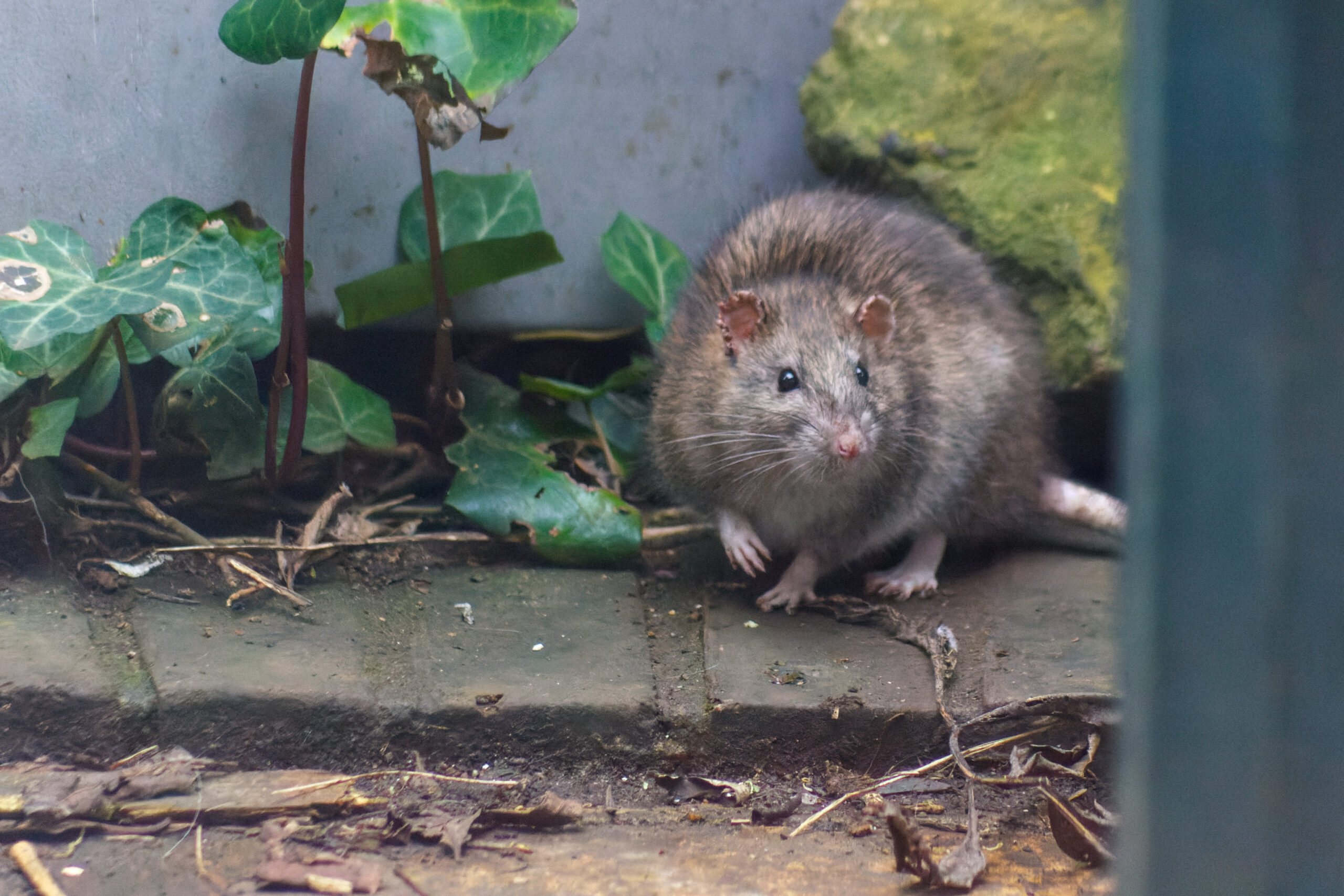
Cities are not as empty at night as they seem. When humans go to sleep, another species becomes active. They move through walls, drains, and hidden corners of the city: rats. These city rats deal with a very different kind of life than their rural relatives, from finding food in messy, changing environments to constantly avoiding humans and everything we do to get rid of them. And yet, they seem to do extremely well in cities all over the world. How is it that rats do so well in urban environments?
Urban vs rural from a rats’ perspective
Rats are often associated with cities, to the point they are called pests. But they are not just urban animals, they are also found in rural areas. The lives these rats lead differ greatly: from how food is found to the risks they encounter every day.
In rural areas, habitats are open and shaped by nature, such as fields, vegetation, and farmland. Food is not very predictable and often depends on the time of year. Open areas leave rats with predators to worry about, such as foxes and birds of prey. They also often live near or on farms, where there is food for livestock and animal sheds that can be used for nests [1], thus making the cows perfect roommates.
In cities, however, rats live in a patchy, human-made landscape of buildings, streets, and sewers. Food is often easy to find and tends to be concentrated in specific spots like trashcans and around restaurants, which are spread out across the city. But the landscape is constantly changing because of human activity, so what is available in one place today might be gone tomorrow. Rats find shelter in hidden spaces like drains and gaps in buildings, but these are also frequently changed or removed, especially in efforts to get rid of rats. Cities are also often a couple degrees warmer than rural areas, a phenomenon known as an urban heat island, which is great for rats, whose activity is constrained by colder temperatures [2].
Why cities suit rats so well
While these environments seem to differ quite a lot, rats actually have a set of traits that make them very well suited for the city life. For one, rats are mainly nocturnal and usually go out to find food when it is dark out, which is exactly when humans are using the city the least. They are also not very picky with what they eat, something that is very handy in a city full of human leftovers. On top of that, they also have a healthy dose of fear of new things, neophobia. They sample new foods carefully before eating it to avoid foods that aren’t good for them, and they are cautious around humans and new objects, making them hard to catch [3].

How to: become an urban rat
When coming to the city, rats thus already bring a set of useful habits that help them survive urban life, alongside the advantages the city itself provides. On top of that, what really helps them thrive is their ability to quickly and easily adapt to a wide range of environments and resources. Their adaptive nature even overrides their cautiousness: they overcome their neophobic tendencies when they are very hungry, and are less neophobic when their environment changes all the time [3].
Even so, this does not mean that nothing is changing on a deeper level. A 2021 study [4] suggests that urban rats may also be undergoing longer-term genetic shifts. Rats in New York City have shown genetic differences in regions linked to metabolism, diet, the nervous system, and movement. This could suggest that, alongside their behavioural flexibility, urban environments are also slowly shaping which traits become more common over time. In other words, cities may not just be selecting for flexible behaviour in the short term, but could also be nudging rat populations in an evolutionary direction; although this is still an active area of research.
Conclusion
Overall, rats do very well in urban environments because of their existing traits and ability to adapt quickly to changing conditions. In many ways, they might even do ‘too well’ according to humans, which is why they are often seen as pests. But if you look a bit closer at why they are there and how they manage to live in these environments, it actually becomes a lot more interesting than just that label suggests.
References
- Villafañe, I. E. G., Cavia, R., Vadell, M. V., Suárez, O. V., & Busch, M. (2013). Differences in population parameters of Rattus norvegicus in urban and rural habitats of central Argentina. Mammalia, 77(2), 187–193. https://doi.org/10.1515/mammalia-2012-0075
- Richardson, J. L., McCoy, E. P., Parlavecchio, N., Szykowny, R., Beech-Brown, E., Buijs, J. A., Buckley, J., Corrigan, R. M., Costa, F., DeLaney, R., Denny, R., Helms, L., Lee, W., Murray, M. H., Riegel, C., Souza, F. N., Ulrich, J., Why, A., & Kiyokawa, Y. (2025). Increasing rat numbers in cities are linked to climate warming, urbanization, and human population. Science Advances, 11(5), eads6782. https://doi.org/10.1126/sciadv.ads6782
- Feng, A. Y. T., & Himsworth, C. G. (2014). The secret life of the city rat: A review of the ecology of urban Norway and black rats (Rattus norvegicus and Rattus rattus). Urban Ecosystems, 17(1), 149–162. https://doi.org/10.1007/s11252-013-0305-4
- Harpak, A., Garud, N., Rosenberg, N. A., Petrov, D. A., Combs, M., Pennings, P. S., & Munshi-South, J. (2021). Genetic Adaptation in New York City Rats. Genome Biology and Evolution, 13(1), evaa247. https://doi.org/10.1093/gbe/evaa247
Cover image: Busby, J. (2021, December 23). Brown rat (Rattus norvegicus) on a patio, Brighton, East Sussex, England [Photograph]. Wikimedia Commons. CC BY 4.0.
