

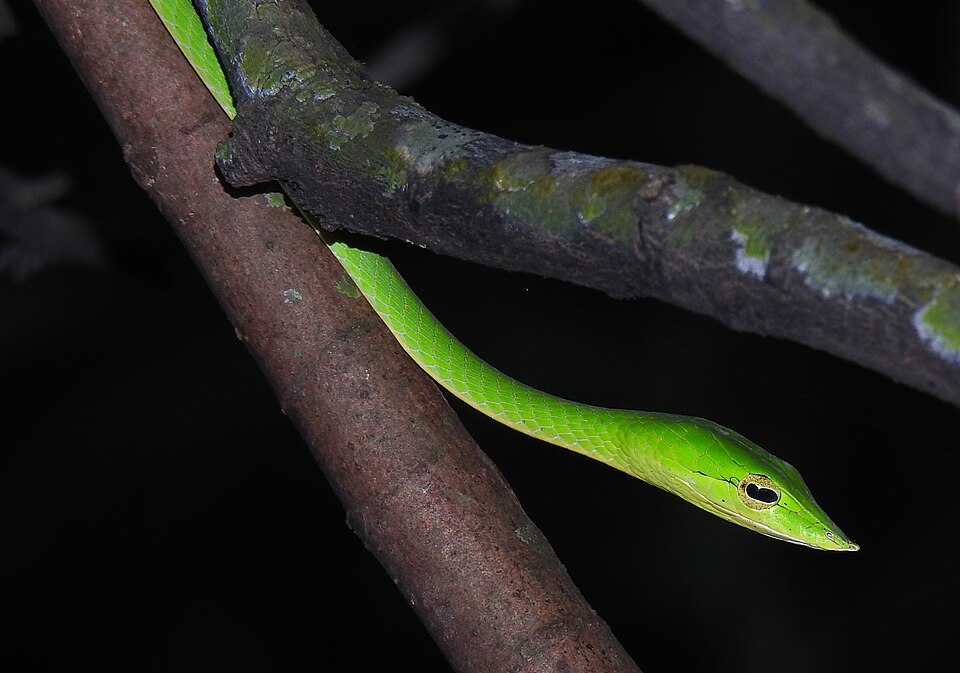
When I say the snake next door, I am not referring to an annoying neighbour. I am talking about an actual animal. The long and quiet reptile which, under rapid urbanization, sometimes appears in human-inhabited spaces. As boundaries between humans and non-human environments become blurry, the encounters between people and snakes become more likely in shared spaces. This is prevalent in tropical and subtropical regions where a high diversity of snake species exists across forests, fields, and expanding settlements. In the place where I grew up, snakes were not rare or exotic sightings. Encountering one was mostly a moment of acknowledgement than alarm.
When Snakes Move In
Snakes being active in the neighboring areas is quite different from having one trying to sneak into human homes. The second scenario signals a possible ecological persistence in modified environments. Urban growth does not entirely eliminate nature. Instead, it often results in smaller fragmented zones or patches. These smaller patches could be informal green corridors, such as a small backyard, leftover vegetation, drainage systems, parking spaces or crevices around homes. Interestingly, these fragmented patches first attract smaller animals like rodents, frogs and geckos that we generally consider harmless. For snakes, that are already pushed out due to habitat destruction; the presence of an easy food supply in cities is simply lucrative.
A study conducted in Delhi supported the evidence that snakes may be evolving to adapt to urban environments. The sampling that took around 41 months resulted in them documenting 372 snakes. That number is a lot, especially for a densely populated megacity like Delhi. While most of the snakes were non-venomous, the sampling provided data on the correlation between their newfound habitat and primary diet. Their sightings peaked during monsoon season, which is matched with the breeding season of frogs. The abundance of vegetation during the monsoon season attracted smaller animals and ultimately resulted in higher foraging activities. (Barhadiya et al., 2024)
Therefore, the presence of snakes does not mean they are plotting an organised takeover of anyone’s parking garage. They might simply be responding to the environmental conditions. As snakes are ectothermic, they tend to occupy cooler habitats during the summer months. With most of the green cover gone, urban structures end up being their temporary refuge for summers. A study conducted in Hyderabad showed that some of the snakes that were rescued from urban spaces and released back into closest green zones either returned back or attracted other snakes resulting in recurring hotspots in the city. The main hotspots identified ended up being either the city centre or edges of the city (Srinivas et al., 2026). It seems like the snake hotspots will not be disappearing anytime soon.
How We Read the Snake
When reptiles live alongside humans, they shape how humans respond to them. However, ecological theory is not how most people identify snakes in real life. Very few individuals encountering a snake in their home begin with calmly looking through taxonomy. Most of the time, the first response is fear mixed with panic and recollecting informal rules that are shaped through community knowledge, memory and a preference for not getting bitten. The unofficial rule I grew up with was rather simple. If the snake looked fancy, that is, colourful, shiny or suspiciously elegant then it was wise to stay away from it. If it looked ugly, it might be less dangerous to human life.
Existence of such non-scientific systems of identification is not uncommon. A comparison study between indigenous knowledge vs scientific classification on hepatofauna conservation showed that locals had detailed knowledge of snake habitats, hiding places and behavioural observations. However, since it was based on recognition patterns and not taxonomy, it commonly resulted in misidentification of venomous and non-venomous snakes. (Chakrabarti et al., 2021). This may not be a perfect system however, it is often highly functional in everyday life. After all, in such environments, survival knowledge does not always come from textbooks; sometimes it may simply be a quick decision that the “fancy-looking one” is probably not worth staying to admire.
Living With the Snake Next Door
Human-snake encounters in urban and peri-urban landscapes are ecologically predictable. They are a result of fragmented habitats and adaptability of the species. The snake next door is less interested in human real estate and more interested in simply adapting, surviving and carrying out it’s ecological role. In case of an encounter, it’s always better to contact professionals. Don’t bother the snake and the snake won’t bother you.
References
Barhadiya, G., Purkayastha, J., Saha, A. K., et al. (2024). Spatial and temporal assessment of snake encounters in urban Delhi, India. Scientific Reports, 14, 1–11. https://www.ncbi.nlm.nih.gov/pmc/articles/PMC10917809/
Srinivas, G., et al. (2026). Urban snake ecology revealed through the lens of decadal data on snake rescues in a megacity. Biological Conservation. https://www.sciencedirect.com/science/article/pii/S2351989426001824
Chakrabarti, P., Rana, S., Sarkar, S., Smith, B., & Basu, P. (2021). Collation of indigenous and local knowledge as evidence base for herpetofauna conservation outside protected areas: Case study from an agricultural landscape in eastern India. Proceedings of the Zoological Society. https://link.springer.com/article/10.1007/s12595-021-00386-2
