

Strolling through Central Park is a staple New York activity. You could spend a whole day exploring the 843 acres of land and enjoying time away from the bustling city. What makes this area of NYC particularly special, though, is the diversity of animal and plant species that call this park home. In fact, according to iNaturalist, over 4,000 species have been recorded in Central Park.
Having a variety of species is crucial to an ecosystem’s health. This is something that scientists refer to as biodiversity. Biodiversity is the measure of species variety in a defined area. This might be recorded in terms of the number of unique taxa, the evenness between different taxa, or even the genetic diversity within a single population. With more unique genes or traits comes a higher chance to survive periods of low resources or have resistance to a certain disease.
The biodiversity found in Central Park is extremely interesting because it is in the middle of an urban area. You may be wondering, how did all of these unique animals and plants find their way into the most populated city in the United States?
The answer is that, while many species are native to the New York area, other species have been introduced through human intervention. Below is a guide to just some of the species that you might spot in Central Park, and whether they are native New Yorkers or have been planted there from a different location.
Native species
Eastern Gray Squirrel
One of the most common animals to find in NYC is the eastern gray squirrel. These squirrels have been around for hundreds of years and are an integral part of New York society. Squirrels are not just restricted to Central Park, but are found all over the city. You may see them scurrying up trees, crossing the streets, or, if unlucky, inside your apartment. Although the eastern gray squirrel is a common find, they are still fascinating to observe in the park.
Monarch Butterfly
Another species that is native to the area is the monarch mutterfly. Monarchs can be seen mostly in the summer time and early fall. They lay their eggs and consume milkweed, which is also commonly found in Central Park. Milkweed contains a toxin that is widely known to be poisonous to animals, including humans. An interesting research study found that monarchs eat milkweed early in their lives, and can then sequester the toxins to use as a defense mechanism against predators (Parsons 1965).
Black Raspberry
Contrary to popular belief, black raspberries are different than blackberries. Black raspberries are hollow in the middle, just like a red raspberry, and can be found in Central Park. These berries are commonly eaten by birds, squirrels, and mice. They are edible for humans as well, but be careful, because insects also like to use them as a place to lay eggs.
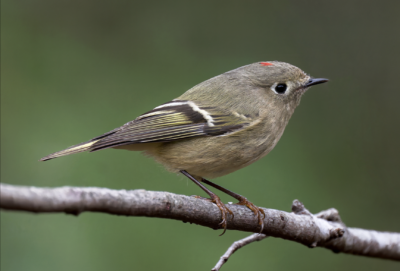
Ruby Crowned Kinglet
These small songbirds can be seen and heard around Central Park. They are very small, around 3-4 inches, and have thin beaks. Male ruby crowned kinglets are known for having a red spot on their heads, likely to attract females or establish territory against other birds. These birds are also common in other areas around the East Coast.
Dooryard Violet
The dooryard violet is a small, purple flower that can also be found in Central Park. They are likely to have a yellow or white center and are also reffered to as a common blue violet. These violets may pop up anywhere in New York, with many people complaining that they are invasive in their backyards and gardens, which is how they got the name “dooryard.”
Black Cherry Tree
The black cherry tree species is the most abundant tree in Central Park. It is known to have white, fragrant flowers that bloom in the spring, and dark colored round berries in the summer. These trees are well-liked by wildlife, because birds, racoons, and squirrels feed on the berries.
Introduced species
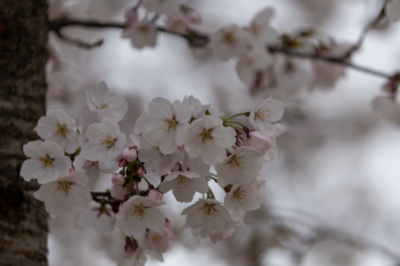
Japanese Cherry Tree
The Japanese cherry tree, as given away by its name, is not native to New York. They are one of the most well-known examples of an introduced species to the United States. The trees were gifted by Japan as a symbol of friendship in 1912, according to the official Central Park Conservancy website. Japanese cherry trees, or Sakura, are also planted in Washington D.C. During the springtime in both areas, many people go to visit the blossoming flowers. In Central Park, you can see them located on Cherry Hill as well as the Reservoir.
Central European Bicolored Ant
Also referred to as the “ManhattAnts,” this species has surely made its mark on the city since their arrival in about 2011. They are somewhat of an ecological phenomenon, as ant experts have yet to uncover how they exactly came to America. These ants are not just in Central Park, but all around Manhattan and beginning to travel to other areas in the East Coast as well. If you come across an ant that has an auburn thorax and a brown head, it is most likely a Central European bicolored ant.
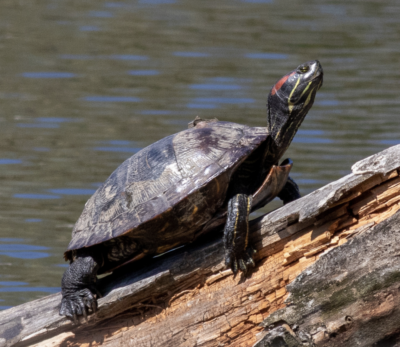
Turtles
One of the most popular animal attractions in Central Park is the Turtle Pond. A variety of turtle species can be seen here such as the red-eared slider, snapping turtle, painted turtle, and box turtle. Although red-eared sliders are native to the southwest region in the U.S., their migrating to Central Park was likely done by human intervention. The Central Park Conservancy organization hypothesizes that it is most likely the turtles got to the park through people abandoning their pets there. While this is an illegal act and they warn citizens not to do so, the turtles seem to have adapted to their new environment and now coexist in the pond area.
Siberian Squill
The Siberian squill was first brought to the U.S. by various countries in Eurasia in the late 1700s. It is characterized by its periwinkle petals and was introduced as a means for decoration. Although they are a vibrant, inviting color, these flowers are actually toxic to both pets and humans. They are also considered an invasive species because they can grow in highly disturbed ecosystems, including the harsh winters on the East Coast. Siberian Squill can be spotted all around Central Park in early spring, but are best to be observed from a distance.
European Carp
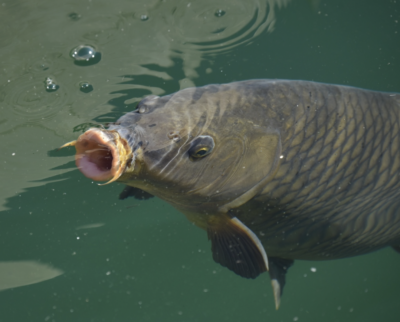
Many visitors do not know that fishing is actually allowed in Central Park. One of the largest fish species that can be found in the park is the European carp. These fish were intentionally planted across the United States beginning in the 1800s. They were a staple resource in Asia and Europe, so the U.S. Commission of Fish and Fisheries hoped to recreate this effect in American water sources. However, the cultivation of carp has complicated may marine ecosystems, and are now considered invasive.
This overview only covers a handful of the species that can be spotted in Central Park. Biodiversity is such a complex topic in science because there are many possibilities of both positive and negative effects that a species can have on the entire ecosystem. Central Park itself is a great example of how a wide variety of species can coexist, even in more urban areas. Next time you find yourself in Central Park, you might stop and think about the fascinating story as to how that species got to the same place as you.
References
- Central Park Conservancy. (n.d.). Central Park. Central Park Conservancy.
- Conservation International. (2018, November 14). Why is biodiversity important? Conservation International.
- Cornell Lab of Ornithology. (n.d.). Ruby-crowned Kinglet identification. All About Birds. All About Birds.
- djringer. (2020, March 29). Identifying the violets of Manhattan (New York County). iNaturalist. iNaturalist.
- iNaturalist. (n.d.). Central European bicolored ant (Lasius emarginatus). iNaturalist.
- Monarch Joint Venture. (n.d.). Why milkweed? Monarch Joint Venture.
- National Park Service. (n.d.). History of common carp in North America. U.S. Department of the Interior. National Park Service.
- NC State Extension. (n.d.). Scilla siberica (Siberian Squill). North Carolina State University. NC State University Plant Toolbox.
- New York City Department of Parks & Recreation. (n.d.). Strange park visitors. NYC Parks. NYC Gov Parks.
- Sommer, L. (2024, August 14). ManhattAnt: Scientists worried about New York ant introduced species, invasive spread. NPR. NPR.
- Tree Plantation. (n.d.). Black cherry tree: Identification, wood value & million dollar tree. Tree Plantation.
- World Wildlife Fund. (n.d.). What is biodiversity? World Wildlife Fund. [1]
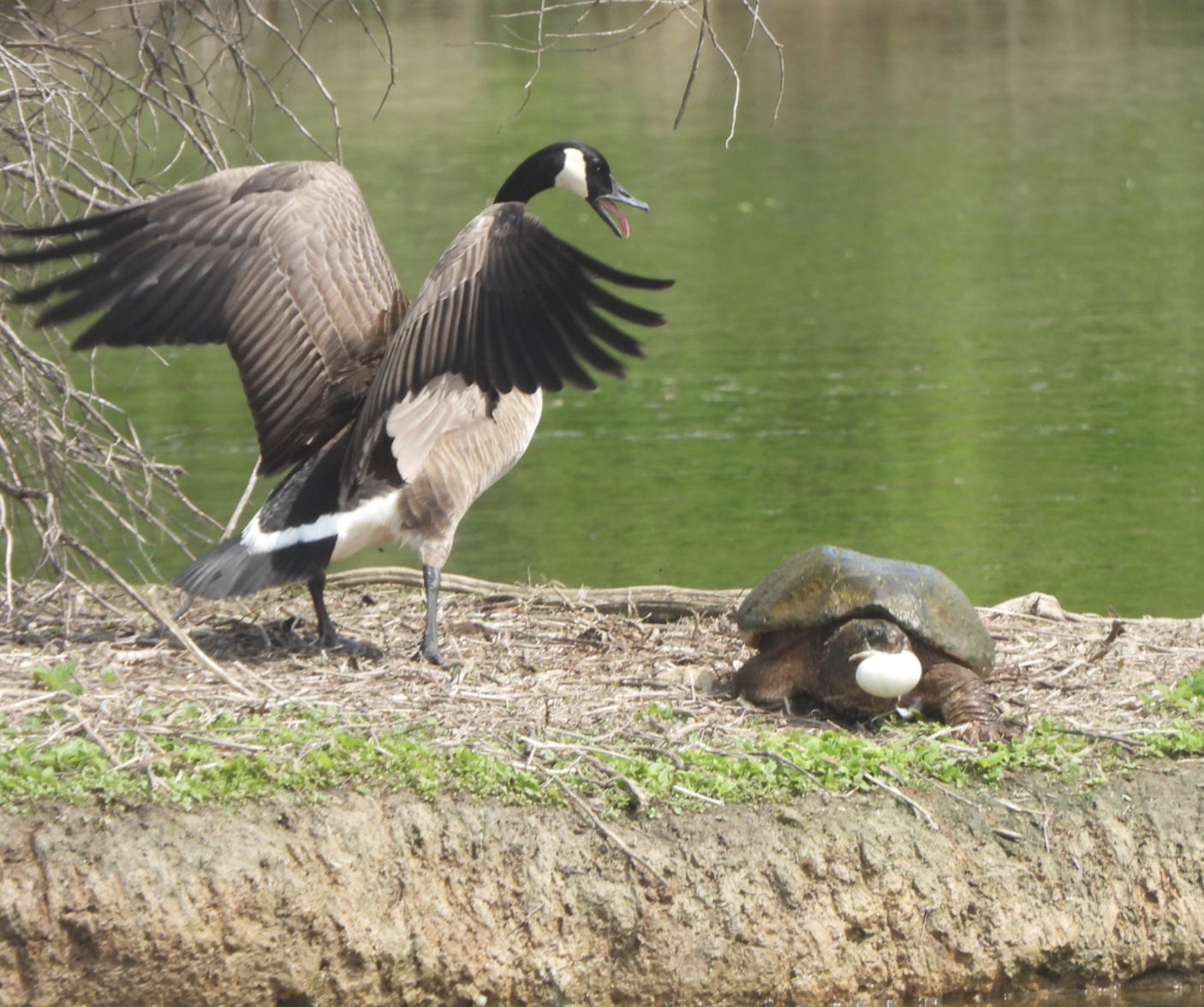
Feature image: A goose approaches a snapping turtle with an egg it its mouth. / Treadwell / iNaturalist / CC BY-NC 4.0
