

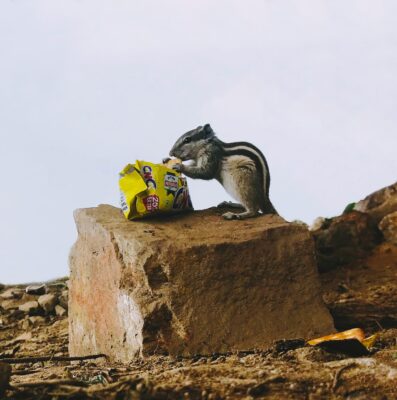
For some organisms, cities are a place of opportunity. Our human diet and lifestyle leads to a lot of waste, some of which is scavenged and can pose a more stable and abundant food resource. Other organisms may benefit from the Urban Heat Island (UHI) effect, whereby the air temperature in urban areas is warmer than their corresponding rural location. The reduced temperature fluctuation offers a more stable environment throughout the seasons (Munshi-South & Kharchenko, 2010). However, going back in time before species had the opportunity to adapt or exploit the city, when large-scale industrialization led to sprawling cities, we also saw the widespread loss and degradation of natural habitats. The development of dense transport systems for humans without alternative travel paths for animal travelers, urban expansion and increased runoff have also led to water pollution, the isolation and fragmentation of habitats, and therefore (in)directly have caused the decline or even extinction of local populations (Konowalik et al., 2020).
Vulnerable vertebrates
One important group of vertebrates knows the consequences of urbanization all too well: the amphibians. Amphibians have a variable life cycle with both aquatic and terrestrial stages; their eggs, larvae and tadpoles stay in streams, ponds and wetlands for several months up to an entire year. This means they require sufficient space and specific conditions to ensure survival, and makes them vulnerable to changes in their different environments. Due to their reproductive cycles, having permanent ponds/bodies of water with a sufficient green area around them is key to ensuring species richness within urban areas (Konowalik et al., 2020). A loss of habitat due to urbanization is one of the biggest threats facing these slimy animals, and among vertebrates, amphibians have the highest global extinction rate (Saenz et al., 2015). If you’re not such a big fan of amphibians, losing this diverse group might not seem like a big deal to you. However, as is often the case in ecology, global declines in the population of one group are linked to an overall loss of diversity in other taxa too. So it’s not just the frogs, toads, salamanders, newts and caecilians that we risk losing, but a host of other plants, animals, fungi, etc. that are connected to them too.
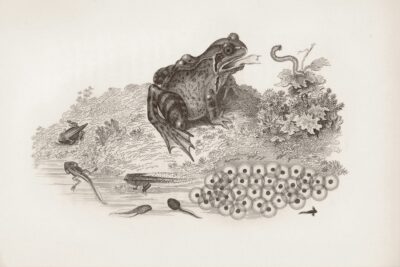
If they didn’t already have it tough enough, besides urbanization and habitat loss, over the past few decades, pathogenic fungi in the genus Batrachochytrium have also been identified as a large threat. The two main species: Batrachochytrium dendrobatidis (Bd) and Batrachochytrium salamandrivorans sp. nov. (Bsal), infect the skin of amphibians causing a lethal disease known as chytridiomycosis. The skin of amphibians is water-permeable, and important for their hydration and respiration. Therefore, once infected, many of their basic functions are disrupted and they risk death (Fisher and Garner, 2020). Growth of this microscopic, aquatic fungus depends on several factors, including humidity/moisture, and temperature. In a laboratory culture Bd grows best between 17-25 ℃, corresponding to infection levels found in nature: increased in cooler months and at higher elevations (Rowley and Alford, 2013). Bd is listed as an internationally notifiable disease by the World Organization for Animal Health as an epidemiologically important pathogen due to concern of its impact (Saenz et al., 2015). Which is not underestimated, having caused the decline or extinction of ~200 species of frog worldwide (Saenz et al., 2015).
Refuge or Risk?
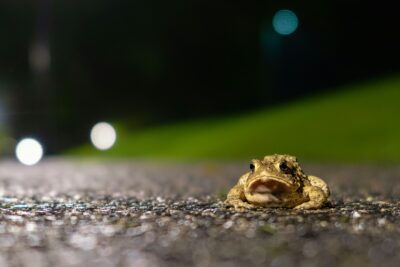
Having researched all of this, I wondered how these two threats interacted. Is the city a warm, concrete host for Bd, a place for its proliferation and future dispersal into nearby green spaces/areas? Or are urbanisation and the pathogenic fungus two antagonistic threats, where one actually reduces the negative impact of the other? As mentioned earlier, this chytrid fungus thrives within a certain temperature range, as a result, various studies have looked into whether it can be combated by raising the temperature. An experimental study by Rowley and Alford in 2013 found that the probability of infection by Bd decreased considerably with increasing body temperatures in three species of rainforest stream frogs above 25 ℃ (Rowley and Alford, 2013). Moreover, this can suggest that (natural) selection for a higher thermal preference could reduce the amphibians susceptibility to Bd. Reading this, hopefully you’re now thinking back to what I was saying before about cities and their UHI effect, and wondering whether the artificially increased warmth of our steel and concrete buildings could reduce the chances of infection; but is this actually the case?
A study from 2015 studied and compared Bd infection rates from urban and non-urban (forested areas) in stony creek frogs (Litoria wilcoxii) and found that the frogs in the city were significantly less likely to test for the fungal infection when compared to the forest frogs (Saenz et al., 2015). They also found that frogs in farmland were found in higher densities, but still had lower infection rates, showing the importance of the specific conditions of the habitat. As for the reasoning behind this result, the authors posed some hypotheses including that urban pollution may impede Bd, allowing the frogs to thrive, but this claim did not come with supporting evidence. Their result seems to support the idea that cities may actually support frogs in fighting this disease, and therefore complicates our image of the city and the negative effects that urbanization brings.
Adding some nuance to this situation, we turn to a paper from 2026 that seems to tell a different story. Heard et al., used models fitted to long-term monitoring data of the growling grass Frog (Litoria raniformis) to inspect the interacting effect of the two stressors, concluding that populations of this Australian frog especially in increasingly urbanized areas, have continued to decline decades after the first emergence of Bd. Since this population has been battling the fungus for decades, it has low adult mortality rates and can therefore not keep up a healthy population dynamic (Heard et al., 2026). In this specific case, the city is missing two important factors: connectivity and supporting mating processes. Due to the lack of healthy adult growling grass frogs, this group has to rely either on a constant supply of juvenile frogs, or a connected habitat that allows for mingling of populations.
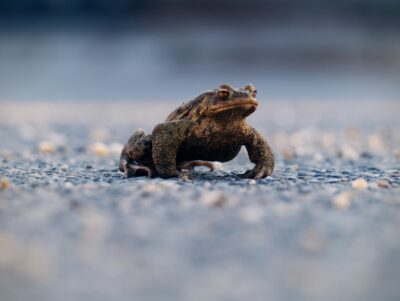
Without adequate support, urbanisation in this area therefore doesn’t seem to be enough to battle the fungus, instead resulting in further habitat loss and population decline over the years.
Taking in all of these studies and stories, all hope is not lost. We can conclude that amphibians have the potential to benefit from the hot city as a method to cope with Bd infection, however this requires the crucial circumstance that the urban environment has the correct infrastructure and landscape planning to be able to support the amphibians. Taking each city as an independent case, and keeping our moist friends in mind while planning, we can build a refuge for us all.
References
Fisher, M. C., & Garner, T. W. J. (2020). Chytrid fungi and global amphibian declines. Nature Reviews Microbiology, 18(6), 332–343. https://doi.org/10.1038/s41579-020-0335-x
Heard, G. W., Robertson, P., Scroggie, M. P., Parris, K. M., McCarthy, M. A., Keely, C., West, M., & Scheele, B. C. (2026). Synergies between disease and urbanization drive the decline of threatened amphibian metapopulations. Ecological Applications, 36(2), e70217. https://doi.org/10.1002/eap.70217
Konowalik, A., Najbar, A., Konowalik, K., Dylewski, Ł., Frydlewicz, M., Kisiel, P., Starzecka, A., Zaleśna, A., & Kolenda, K. (2020). Amphibians in an urban environment: A case study from a central European city (Wrocław, Poland). Urban Ecosystems, 23(2), 235–243. https://doi.org/10.1007/s11252-019-00912-3
Munshi-South, J., & Kharchenko, K. (2010). Rapid, pervasive genetic differentiation of urban white-footed mouse (Peromyscus leucopus) populations in New York City. Molecular Ecology, 19(19), 4242–4254. https://doi.org/10.1111/j.1365-294X.2010.04816.x
Rowley, J. J. L., & Alford, R. A. (2013). Hot bodies protect amphibians against chytrid infection in nature. Scientific Reports, 3(1), 1515. https://doi.org/10.1038/srep01515
Saenz, D., Hall, T. L., & Kwiatkowski, M. A. (2015). Effects of urbanization on the occurrence of Batrachochytrium dendrobatidis: Do urban environments provide refuge from the amphibian chytrid fungus? Urban Ecosystems, 18(1), 333–340. https://doi.org/10.1007/s11252-014-0398-4
