

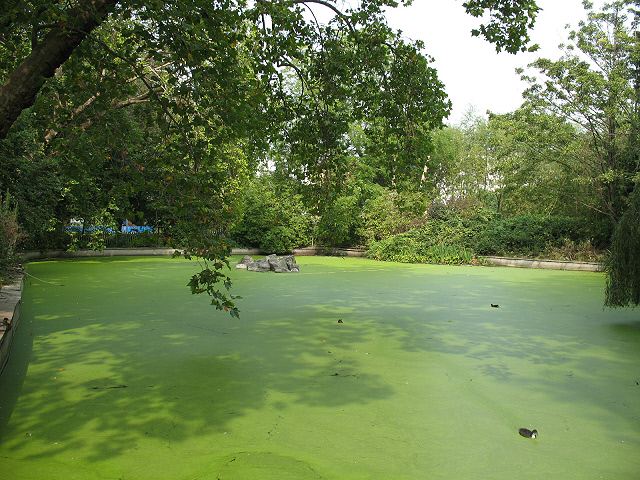
With the rise of modern medicine came the rise of pharmaceutical waste. Not only expired or discontinued drugs and hospital waste fall under this category, but also sources such as the components of ingested drugs that are not being metabolized by the patient, therefore reaches their faeces, which are disposed of in the bathroom and ultimately end up in natural aquatic environments (Kadam et al., 2016; Santos et al., 2013). These pharmaceuticals can stay reactive as Active Pharmaceutical Ingredients (APIs) and (bio)chemically alter the environment (Gojkovic et al., 2019; Kadam et al., 2016). This increasing pollution of urban wastewaters due to medicinal waste can reach high enough concentrations for the aquatic ecosystem to be affected. Current filtering policies do not provide enough purification for the wastewater to reach a pharmaceutical residue-free status, as studies repeatedly show these components to be present in rivers, landfills and groundwater all across the world (Rogowska & Zimmermann, 2022; Singh et al., 2014).
Multiple treatments have been suggested to fix this increasing problem, amongst which the use of algae (Gentili & Fick, 2017; Gojkovic et al., 2019; Kadam et al., 2016). Algae are known for their rapid biomass producing ability, often from specific components such as nitrogen and carbon dioxide (Gojkovic et al., 2019). Some trials with certain algae species even show potential in them being able to break down pharmaceuticals (Gentili & Fick, 2017; Gojkovic et al., 2019; López-Serna et al., 2019).
An example is a study by Gajkovic et al. (2019) combinations of different algal species and APIs were cultured in bioreactors to test removing abilities of these algae. They selected strains of the fast-growing Chlorella sorokiniani, C. vulgaris, and C, saccharophila as well as spherical cells of Coelastrella and Coelastrum astroideum. The last group of algae consisted of Desmodesmus sp., Scenedesmus sp. and S. obliquus. These algae were cultivated with APIs, with control tanks without pharmaceuticals serving as control groups. Samples were taken on multiple moments and analysed for growth rates and API concentrations.

The ability of the strains in removing the compounds differed very much per species in the Gojkovic study, but the general trend showed potential of algal use in cleanup of pharmaceutical waste.

Even though we are not yet there, potential for using algae to clean up the urban wastewaters is high. We might need our friends from nature more than we think.
References
Escapa, C., Coimbra, R. N., Paniagua, S., García, A. I., & Otero, M. (2015). Nutrients and pharmaceuticals removal from wastewater by culture and harvesting of Chlorella sorokiniana. Bioresource Technology, 185, 276–284. https://doi.org/10.1016/j.biortech.2015.03.004
Gentili, F. G., & Fick, J. (2017). Algal cultivation in urban wastewater: an efficient way to reduce pharmaceutical pollutants. Journal of Applied Phycology, 29(1), 255–262. https://doi.org/10.1007/s10811-016-0950-0
Gojkovic, Z., Lindberg, R. H., Tysklind, M., & Funk, C. (2019). Northern green algae have the capacity to remove active pharmaceutical ingredients. Ecotoxicology and Environmental Safety, 170, 644–656. https://doi.org/10.1016/j.ecoenv.2018.12.032
Kadam, A., Patil, S., Patil, S., & Tumkur, A. (2016). Pharmaceutical Waste Management An Overview. Indian Journal of Pharmacy Practice, 9(1), 2–8. https://doi.org/10.5530/ijopp.9.1.2
López-Serna, R., Posadas, E., García-Encina, P. A., & Muñoz, R. (2019). Removal of contaminants of emerging concern from urban wastewater in novel algal-bacterial photobioreactors. Science of The Total Environment, 662, 32–40. https://doi.org/10.1016/j.scitotenv.2019.01.206
Rogowska, J., & Zimmermann, A. (2022). Household Pharmaceutical Waste Disposal as a Global Problem—A Review. International Journal of Environmental Research and Public Health, 19(23), 15798. https://doi.org/10.3390/ijerph192315798
Santos, L. H. M. L. M., Gros, M., Rodriguez-Mozaz, S., Delerue-Matos, C., Pena, A., Barceló, D., & Montenegro, M. C. B. S. M. (2013). Contribution of hospital effluents to the load of pharmaceuticals in urban wastewaters: Identification of ecologically relevant pharmaceuticals. Science of The Total Environment, 461–462, 302–316. https://doi.org/10.1016/j.scitotenv.2013.04.077
Singh, K. P., Rai, P., Singh, A. K., Verma, P., & Gupta, S. (2014). Occurrence of pharmaceuticals in urban wastewater of north Indian cities and risk assessment. Environmental Monitoring and Assessment, 186(10), 6663–6682. https://doi.org/10.1007/s10661-014-3881-8
Featured photo: © Stephen Craven / Brookmill Park: lake with algal bloom


Leave a Reply