

There is a high likelihood that you have recently used (or at least heard about), products containing PFAS. This chemical group, which is widely used in products such as the coating of non-stick pans, waterproof clothing and firefighting foam, is found in dangerous amounts in the majority of waterways in Europe (European Environment Agency, 2024). PFAS pollution is most prevalent in urban areas and near PFAS sources such as factories, with a 75% chance of observable tap water contamination in urban areas compared to 25% in rural areas of the United States (USGS, 2023). This is problematic, because high concentrations of PFAS can have severe impacts on human and environmental health, with an economic consequence estimated to reach a cost to society of 440 billion euros in health and cleanup expenses (European Commission, n.d.). PFAS chemicals have a strong carbon-fluorine (C-F) bond, which makes them very difficult to degrade.
Sponges for PFAS cleanup
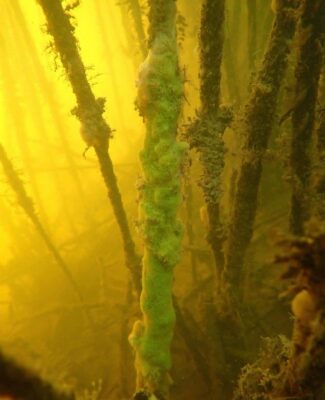
Nicole de Voogd, sponge specialist and researcher at Naturalis Biodiversity Center in Leiden is, together with a team of her colleagues, looking at a possible solution for PFAS pollution. The first thing that likely comes to mind when you think of sponges is the synthetic polyurethane foam sponge commonly found in a kitchen sink. These sponges are inspired by an animal known as the bath sponge, or Spongia officinalis, which is found in the Mediterranean Sea and was once commercially harvested on a large scale. Bath sponges are one of many sponge species within the phylum Porifera, and can be found in either salt or freshwater. De Voogd tells me that while the most famous sponge species is found in the Mediterranean, the distribution of sponges is worldwide. They can even be found in the canals of Leiden. And while sponges are now mostly known for doing the dishes, they could soon steal the show as an important player in environmental cleanup.
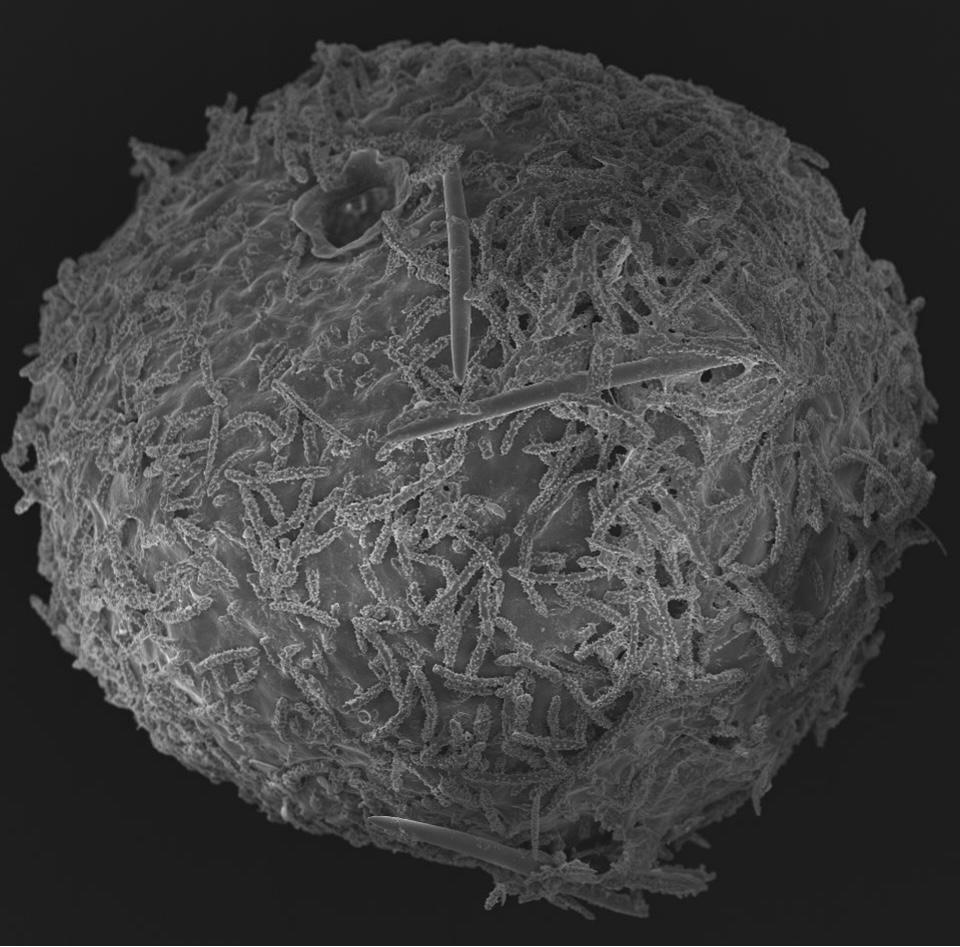
The sponges De Voogd intends to use are physiologically different from bath sponges and would be an unwise tool to use for cleaning household objects because their skeleton is made out of glass needles. However, they can still help to keep our cities clean. Sponges feed by filtering organic matter out of the water that streams through the holes in their bodies. They form symbiotic relationships with microorganisms such as bacteria that can aid in processes such as vitamin production and nutrient transport (Thomas et al., 2010). By filtering nutrients out of the water, sponges help reduce nutrient pollution in waterways. Research by Marzuki et al. (2023) showed sponges do not only help fight pollution by filtering out nutrients, but the bacterial symbionts in sponges can reduce water pollution by performing biosorption of heavy metals. It works similarly to the feeding process, but on top of filtering out nutrients, the sponges also filter out pollutants that are then digested by their bacterial inhabitants. Interestingly, sponges accumulate these toxic materials very efficiently, without resulting in death as it would in other organisms, De Voogd says.
Now, De Voogd and colleagues are embarking on an academic journey to investigate whether sponges could be used to clean up PFAS. They have just received a grant allowing them to look at possibilities for incorporating PFAS-degrading microbes into the microbiome of sponges, as some naturally-occurring microbes have demonstrated an ability to break the strong C-F bonds and degrade PFAS chemicals (Ye et al., 2025). While we are not sure yet about the exact role sponges can play in PFAS removal, soon to be published research by De Voogd and colleagues does show that sponges at PFAS dumping sites accumulate the chemicals. Experiments showed that sponges at these sites have an adapted microbiome compared to sponges in clean water.
Sponge gardens
Sponges will not naturally grow everywhere: they prefer to attach to hard substrate in an area where there is a bit of a current. This is why in The Netherlands, a country without many natural rocks in water bodies, they seem to do so well in human-made canals. But if you provide an area for the sponges to grow on, their possible habitat increases. De Voogd says that if they succeed in growing PFAS cleaning sponges, underwater sponge gardens could be placed in the water ways of cities and other affected areas to form a nature-based solution for PFAS pollution. Depending on the exact mechanism the sponges would use to accumulate or degrade PFAS, they could remain as natural parts of the ecosystem, or be periodically removed and discarded.
There is still a lot to be discovered about the way sponges could help reduce PFAS pollution. But while we wait patiently for De Voogd and her colleagues to conduct their research, you should take a peek in your local waterway and think about the wondrous possibilities of your local sponges.
Note: I spoke with Nicole de Voogd on May 15, 2026. Her colleagues that are also working on this project are Prof Han de Winde & Prof Daniel Rozen.
The featured image in this post is a picture of a gemmule taken by De Voogd using an electron microscope. In this image you can see the glass needles that from the skeleton for this freshwater sponge.
References
European Environment Agency. (2024, December 9). ’Forever chemicals’ found above threshold levels in many water bodies in Europe. Press Releases | European Environment Agency (EEA). https://www.eea.europa.eu/en/newsroom/news/forever-chemicals-in-water-bodies
Marzuki, I., Rosmiati, R., Mustafa, A., Sahabuddin, S., Tarunamulia, T., Susianingsih, E., Hendrajat, E. A., Sahrijanna, A., Muslimin, M., Ratnawati, E., Kamariah, K., Nisaa, K., Herlambang, S., Gunawan, S., Santi, I. S., Isnawan, B. H., Kaseng, E. S., Septiningsih, E., Asaf, R., . . . Basri, B. (2023). Potential utilization of bacterial consortium of symbionts marine sponges in removing polyaromatic hydrocarbons and heavy metals, review. Biology, 12(1), 86. https://doi.org/10.3390/biology12010086
Thomas, T., Rusch, D., DeMaere, M. Z., Yung, P. Y., Lewis, M., Halpern, A., Heidelberg, K. B., Egan, S., Steinberg, P. D., & Kjelleberg, S. (2010). Functional genomic signatures of sponge bacteria reveal unique and shared features of symbiosis. The ISME Journal, 4(12), 1557–1567. https://doi.org/10.1038/ismej.2010.74
USGS. (2023, June 23). Tap water study detects PFAS ‘forever chemicals’ across the US. Retrieved May 15, 2026, from https://www.usgs.gov/news/national-news-release/tap-water-study-detects-pfas-forever-chemicals-across-us
Ye, D., Wang, Z., Qian, X., Ouyang, K., Wu, D., Tang, F., Hrynsphan, D., Savitskaya, T., & Chen, J. (2025). Biodegradation of per- and polyfluoroalkyl substances: microbes, enzymes and their interactions. Reviews in Environmental Science and Bio/Technology, 24(1), 43–62. https://doi.org/10.1007/s11157-025-09721-x
