

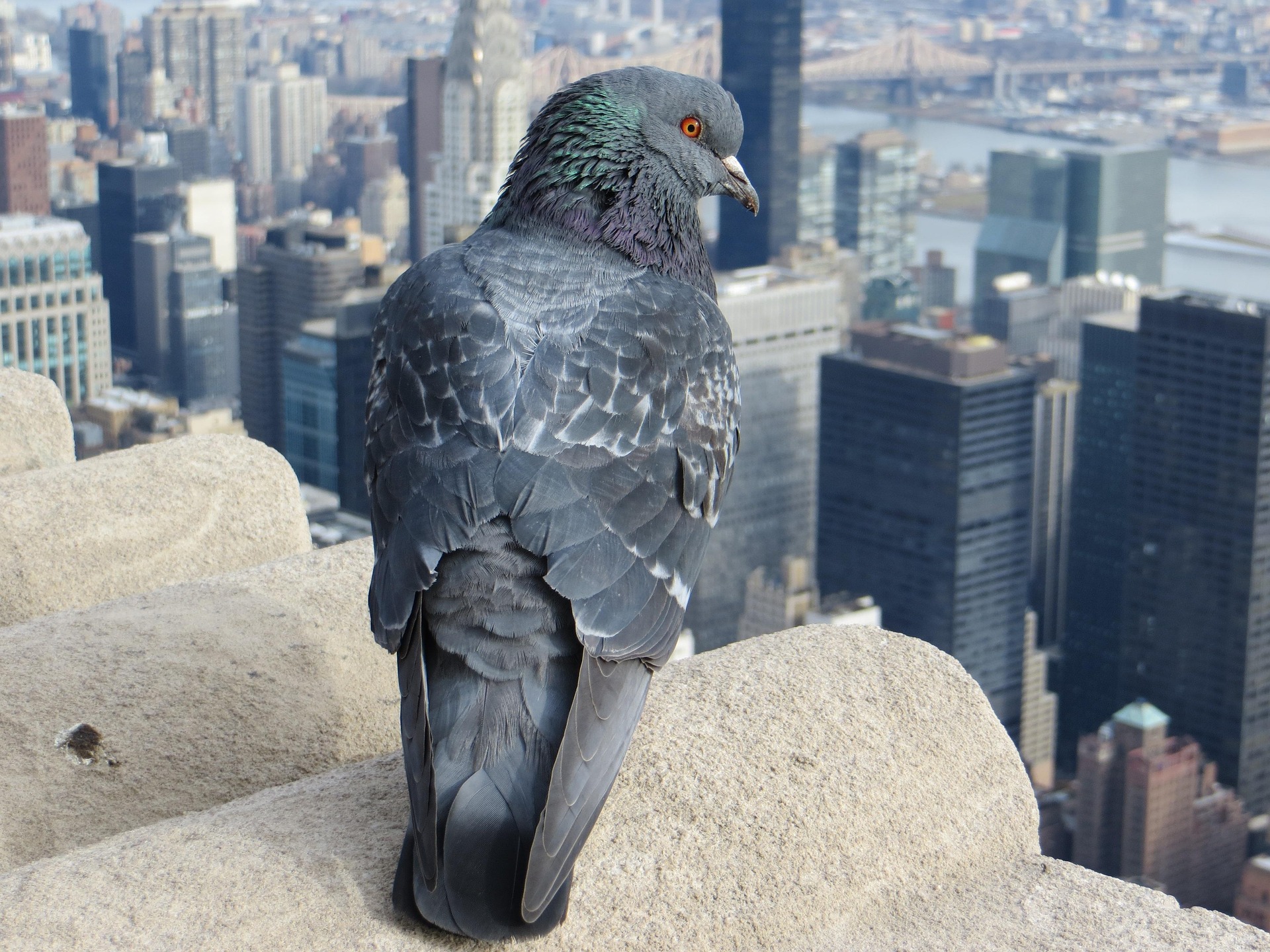
Everyone has experienced the lurking of pigeons close to them, waiting for the right opportunity for a crumb of your sandwich to fall to the ground. They fearlessly walk among crowds or fly above our heads while dropping presents. We have become so used to them that we dismiss them. However, their behaviour is one of the best examples of how animals adapt to urban civilisation. Pigeons, also known as Columba livia, have adapted so well to us and what we have built that they are able to exploit man-made habitats to their highest ability. These birds used to live on cliffs before becoming permanent residents in cities. Their attraction to these urban areas seems to be our own doing. Our architecture, which mainly consists of high buildings and bridges, can also be described as man-made cliffs. Unknowingly, we made the ideal nesting place. This example also paints a bigger picture: as we develop, we also unintentionally replicate the animals’ natural habitats. Aside from our tall building being a welcome sign for these birds, we also sustain them, which makes them reluctant to leave.
However, not all animals are able to thrive under these new conditions. Animals that cannot adapt quickly will not or will have difficulty surviving in these urban environments. The reason that pigeons are able to survive so well in urban areas is due to their ability to adapt very quickly. It is known that these birds are not picky with their food, which is a boon in these new environments. They have no complaints about consuming food waste or urban foods, particularly such as processed meals. This allows them to have enough rations to stably breed all year long as well, compared to pigeons in the wild that have to scavenge harder for food than urbanised pigeons. Furthermore, pigeons are known for their memory since they are able to recognise the people or places that habitually provide food. These characteristics help these birds survive in the chaotic urban environments. Pigeons are thereby characterised as synanthropic, which means that they have adapted so well to living close to humans that they are capable of profiting from it. So although urbanisation can be seen as a disturbance to the natural environment, thus also many animal species, it can also be an advantage for the C. livia.
However, there is no denying that they are unpopular creatures that are not well-liked. Not only do they leave behind droppings anywhere they please, but they are also often accused of being disease carriers. Their droppings are very acidic, meaning that they can cause damage to buildings, monuments, etc., in the long run. Sometimes they also build their nests in the crooks of buildings, like apartments, which can lead to an irritating noise and smell for the inhabitants. Unfortunately, we are the architects of our own misery. Aside from our tall building being a welcome sign for these birds, we also sustain them, which makes them reluctant to leave. The reason why there are so many pigeons, as well as their increasing presence, can be seen as a result of an increase in the population. Studies have shown that extensive urbanisation has led to more movement between municipalities than ever before. Cities keep them warm in the winter, and food waste and spilling trash cans provide a constant supply of food. Every day, a large number of people are present in public areas like train stations, parks and retail districts, which increases the likelihood that pigeons will find food.
In conclusion, pigeons show how well animals can adapt to human society. Despite the fact that they are frequently considered pests, their success in urban areas clearly shows how humans affect the environment. People have accidentally created the perfect environment for pigeons to flourish by building structures that resemble cliffs and generating a lot of garbage. Therefore, their presence in cities serves as a reminder that urbanisation changes not only human life but also the lives of animals that learn to live alongside us.
References:
- Carlen, E., & Munshi‐South, J. (2020). Widespread genetic connectivity of feral pigeons across the Northeastern megacity. Evolutionary Applications, 14(1), 150–162. https://doi.org/10.1111/eva.12972
- Johnston, R. F., & Janiga, M. (1995). Feral pigeons. Oxford University Press.
- Haag-Wackernagel, D. (1995). Regulation of the street pigeon in Basel. Wildlife Society Bulletin, 23(2), 256–260.
- Jerolmack, C. (2013). The global pigeon. University of Chicago Press.
- Giunchi, D., Albores-Barajas, Y. V., Baldaccini, N. E., Vanni, L., & Soldatini, C. (2012). Urban pigeons and human conflict: Impacts on buildings and city environments. Urban Ecosystems, 15(4), 913–924. https://doi.org/10.1007/s11252-011-0212-5
