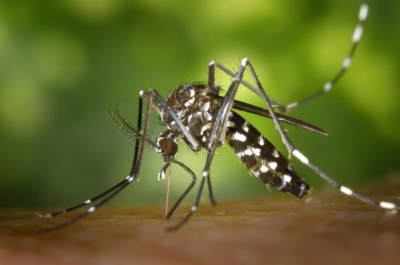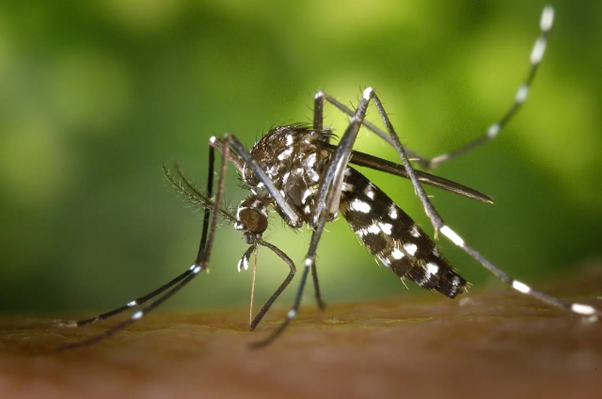
Imagine returning from a summer holiday in Italy. The warm Mediterranean climate feels far removed from the cool Dutch weather you are used to. Your suitcase is unpacked, your laundry is done, but hidden somewhere inside the car is an unnoticed passenger: an Asian Tiger Mosquito. Within weeks, eggs are laid in a Dutch city where winters are no longer cold enough to kill them.
Near the end of 2025, the Dutch news outlet NOS published an article warning that the Asian Tiger Mosquito may become permanently established in the Netherlands within five years and could become nearly impossible to eradicate. This raises concerns not only for people who dislike mosquito bites, but also for public health, biodiversity and the economy.
The bite of the Tiger Mosquito is not only more painful than that of native mosquito species, but the insect can also transmit dangerous viruses and parasites such as dengue fever, yellow fever, chikungunya and parasitic roundworms like Dirofilaria (RIVM; WHO). These diseases can have serious health effects on humans and animals alike. In countries where the mosquito has already established itself, outbreaks of mosquito-borne diseases are becoming increasingly common. Besides carrying diseases, the Tiger Mosquito can also disrupt local ecosystems. By competing with native mosquito species and adapting quickly to new environments, it can alter the balance of local insect populations. Because of its invasive nature and rapid global spread, the International Union for Conservation of Nature (IUCN) has ranked the Asian Tiger Mosquito among the world’s most invasive exotic species.
One of the main reasons these exotic insects are now able to survive farther north is climate change. Global temperatures are already estimated to be around 1.4 degrees warmer than pre-industrial levels (ESTOTC, 2025), while climate projections suggest winter temperatures in parts of Europe could rise significantly during the coming decades (DKRZ). In the past, cold European winters acted as a natural barrier that prevented tropical mosquito species from surviving. As winters become milder, these insects are increasingly capable of surviving and reproducing in northern European countries such as the Netherlands.
This warming effect becomes even stronger in cities because of a phenomenon known as the Urban Heat Island effect (UHI). Due to dense infrastructure such as roads, concrete and buildings, combined with a lack of vegetation, cities retain much more heat than surrounding rural areas. Research by Steeneveld et al. (2011) found that temperatures in Dutch cities can be several degrees higher than nearby countryside areas. These warmer urban temperatures create ideal conditions for invasive insects. Cities also provide excellent breeding grounds. Small amounts of standing water in gutters, rain barrels, flower pots or drains are enough for Tiger Mosquitoes to lay eggs. Combined with fewer natural predators and warmer temperatures, urban areas become ideal environments for these insects to thrive.
But how do these mosquitoes travel all the way from Asia to the Netherlands? The truth is that most of them do not fly these enormous distances themselves. Instead, they hitchhike alongside humans through international trade and tourism. The first Tiger Mosquitoes arrived in Europe through shipping containers, used car tires and airplanes. Their eggs are highly resistant and can survive dry conditions for months, allowing them to travel unnoticed across continents. Once introduced into warmer regions such as Italy, southern France and the Balkans, the mosquitoes were able to establish permanent populations.
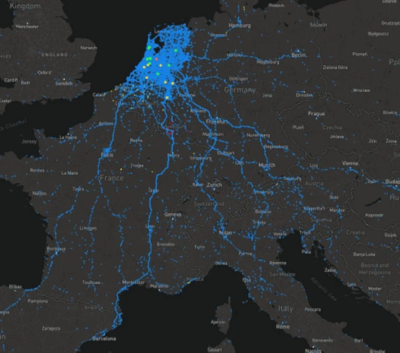
Now that the species is widespread across southern Europe, cars and trucks have become one of the main ways the mosquito spreads to the north. During summer holidays, millions of Europeans travel between northern and southern Europe. Data collected by the Dutch traffic application Flitsmeister shows how large numbers of Dutch tourists travel toward southern Europe during the summer season (figure 2). Like the saying “all roads lead to Rome,” many southern European highways seem to lead directly back to the Netherlands during holiday periods. Unfortunately, tourists are not always traveling alone. Mosquitoes can easily hide inside cars, caravans or luggage before hitchhiking back north with unsuspecting travelers.
Preventing the permanent establishment of the Tiger Mosquito will require both local and international action. Monitoring programs at airports, highways and shipping centers can help detect mosquito populations early. Citizens can also contribute by removing standing water from gardens and balconies, reducing the number of places where mosquitoes can reproduce. In the long term, greener and cooler cities may help reduce the Urban Heat Island effect that currently favors invasive species.
The arrival of the Tiger Mosquito demonstrates how climate change and globalization increasingly work together. Warmer cities create suitable habitats, while modern transport networks allow invasive species to travel across continents with ease. What once seemed like a tropical problem may soon become part of everyday life in the Netherlands. The question is no longer whether these invasive insects will arrive, but how prepared we are for their arrival.