

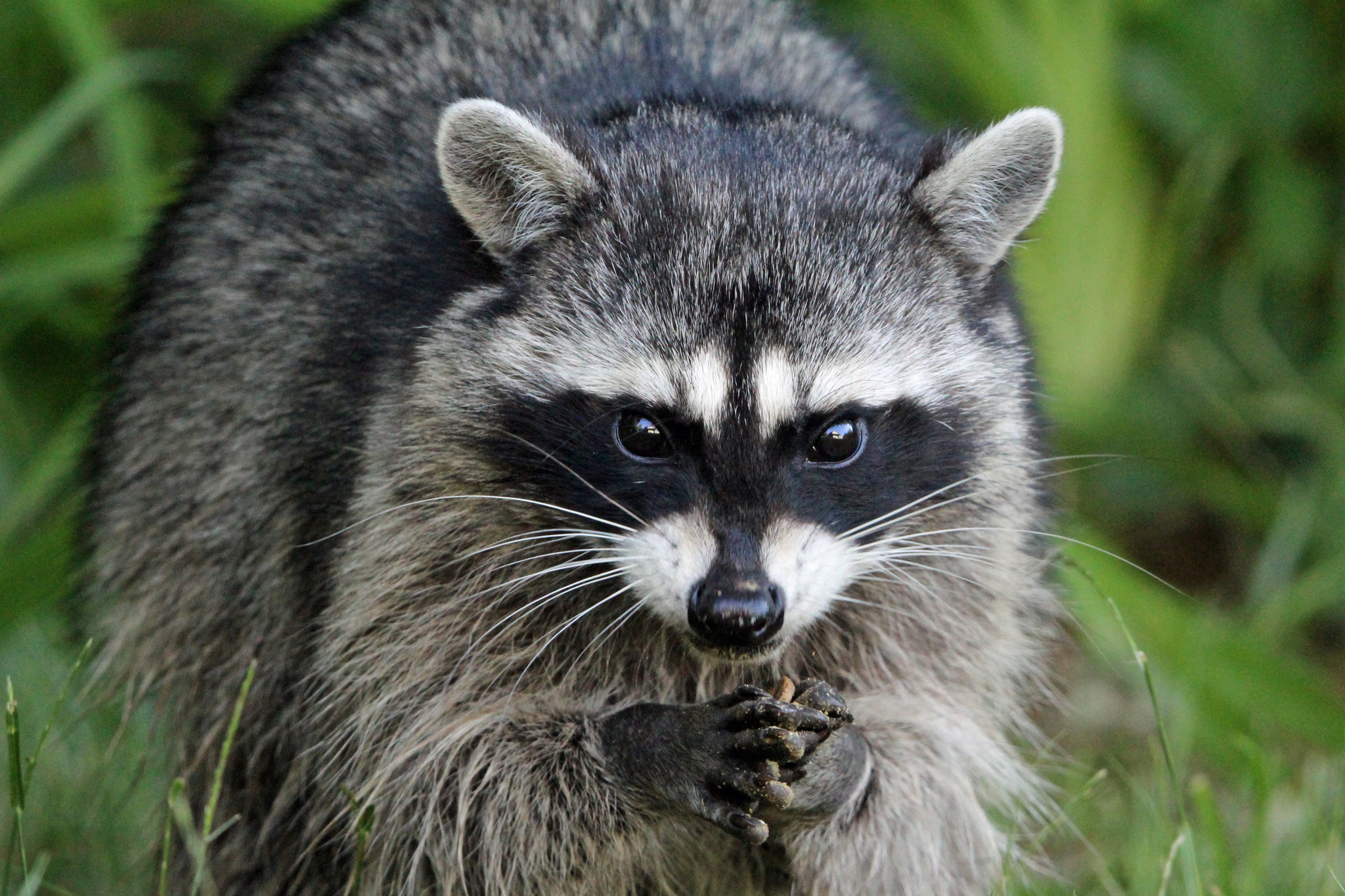
Everyone is familiar with this image, either from popular media or maybe even from real life: you’re walking through a North American city at night and spot a masked face peering out from a dumpster. The Procyon lotor, or also known as the common racoon, have long been dubbed as “trash pandas” due to their cleverness, mischievous antics, and their undeniable cuteness. But could these animals be on a long-term evolutionary trajectory towards self-domestication?
Scientists say racoons aren’t quite pet-ready yet. But a new study from 2025 conducted by the researchers from the University of Arkansas claims that racoons are showing signs of self-domestication right now. The researchers’ goal was to see whether urbanisation or an urban environment could potentially kickstart a domestication event in racoons using a massive citizen science repository. The findings are nothing short of extraordinary: racoons that live in close proximity to humans are developing shorter snouts than racoons that live in non-urban areas!
Unraveling the “Domestication Syndrome”
To understand why a shorter nose matters we have to look at the history of evolutionary biology. When Charles Darwin investigated domesticated species he found that domesticated mammals show a suite of behavioural, physical, and morphological changes that are not observed in their wild forebears. This phenomenon is also known as the “domestication syndrome” and is often observed across completely unrelated species. Today we know that these changed traits include, but are not limited to, floppy ears, curly tails, smaller brains, and shortened facial skeletons. A prime example of this phenomenon is when tens of thousands of years ago the proto-dogs began their domestication journey.
Historically, the domestication of wild mammals demonstrated that selecting animals for their tameness, or their reduced fear and aggression response to humans, inadvertently triggered these structural variations. So when wild animals enter areas that are dominated by humans, the rules of natural selection shifts. The individuals that succeed aren’t necessarily the most aggressive hunters or the most avoidant of people, but those with a dampened flight-or-flight response. These individuals can then go on and calmly exploit human refuse, food scraps, and other (sub)urban resources.
From iNaturalist to Evolutionary Insights
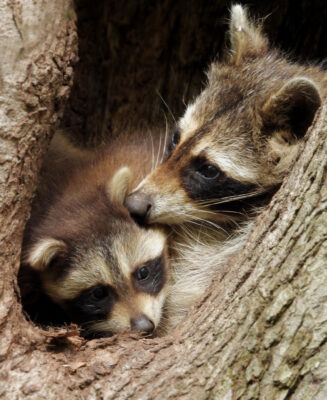
To see whether urban racoons are showing the early signs of domestications, the researchers from Arkansas turned to a massive public data source: citizen science. They gathered over 100.000 racoon images uploaded by nature enthusiasts onto the iNaturalist platform. After selecting for quality, clarity, and angle, they rigorously analysed nearly 20.000 research-grade images spanning the entire continental United States.
By measuring the distance from the tip of the nose to the anatomical markers near the ears, the researchers established reliable proxies for skull and snout proportions. They then cross-referenced these measurements with the population densities and urbanisation levels of the locations where the photos were captured.
The data revealed a stark pattern: racoons living in urbanised areas possess significantly smaller snouts on average compared to their more rural or wilder counterparts. This subtle change mirrors the exact facial shortening seen in the early domestication of the proto-dog and even mice.
Self domestication in Real Time
What makes this finding particularly interesting is that it captures the evolutionary route to domestication. Unlike farm animals or dog breeding, where selective breeding is directed by human hands, racoons in urban environments are seemingly domesticating themselves entirely through natural selection.
Cities offer a highly lucrative ecological niche packed with abundant food sources and a relative lack of large apex predators. To successfully colonise this environment, racoons must adapt to human interference. Only those with the predisposition for high tolerance of humans, urban problem-solving, and lower aggression will be able to pass on their genes. One could say that the urban landscape acts as a massive evolutionary crucible.
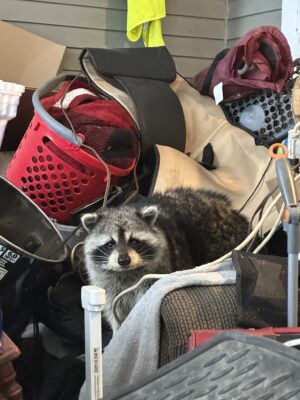
While pets won’t be sold as pets anytime soon, they remain highly intelligent, but wild and unpredictable animals. The study conducted by the researchers from the University of Arkansas demonstrates that human urbanisation is profound enough to rewrite the physical anatomy of the wildlife we share our neighbourhoods with. So the next time you spot a “trash panda” scurrying across a backyard fence, you might just be looking at the early development of a completely new domestic lineage playing out right before your eyes.
Reference
- Apostolov, A., Bradley, A., Dreher, S., Dwyer, C., Edwards, J., Evans, M. E., Gu, N., Hansen, J., Lewis, J. D., Mashburn, A. T., Miller, K., Richardson, E., Roller, W., Stark, A., Swift, J., Zuniga, O., & Lesch, R. (2025). Tracking domestication signals across populations of North American raccoons (Procyon lotor) via citizen science-driven image repositories. Frontiers in Zoology, 22(1), 28. https://doi.org/10.1186/s12983-025-00583-1
- Wilkins, A. S., Wrangham, R. W., & Fitch, W. T. (2014). The “domestication syndrome” in mammals: a unified explanation based on neural crest cell behavior and genetics. Genetics, 197(3), 795-808. https://doi.org/10.1534/genetics.114.165423
- Parsons, K. J., Rigg, A., Conith, A. J., Kitchener, A. C., Harris, S., & Zhu, H. (2020). Skull morphology diverges between urban and rural populations of red foxes mirroring patterns of domestication and macroevolution. Proceedings of the Royal Society B: Biological Sciences, 287(1928). https://doi.org/10.1098/rspb.2020.0763
- Geiger, M., Sánchez-Villagra, M. R., & Lindholm, A. K. (2018). A longitudinal study of phenotypic changes in early domestication of house mice. Royal Society open science, 5(3). https://doi.org/10.1098/rsos.172099
Images
- iNaturalist Photo 293156528, (c) jayras, some rights reserved (CC BY-NC), uploaded by jayras https://www.inaturalist.org/photos/293156528
- iNaturalist Photo 660904855, (c) michaelbjackson, some rights reserved (CC BY-NC), uploaded by michaelbjackson https://www.inaturalist.org/photos/660904855
- iNaturalist Photo 468434512, (c) Theo, some rights reserved (CC BY-NC), uploaded by theogerhard https://www.inaturalist.org/photos/468434512
